Costa News Spain Breaking News | English News in Spain.

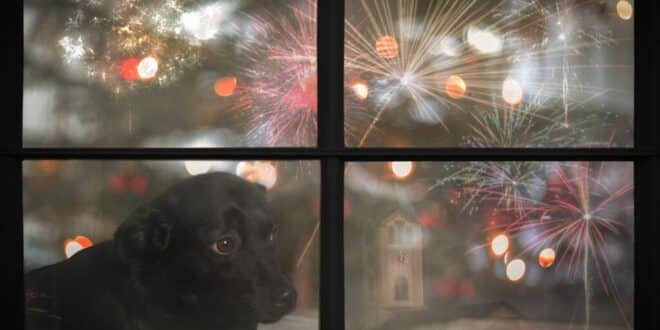
Animal welfare organisations have documented instances of animals jumping fences, running into the road, disappearing, or collapsing in shock. Photo credit: Vince Scherer/Shutterstock
Bonfire Night has been a British tradition for many years. It is marked by spectacular displays, bonfires that crackle and celebrations. As a veterinary specialist and animal welfare nurse, I can tell you that while we may enjoy the spectacular displays, many animals are experiencing extreme fear and stress. Fireworks can cause panic in animals and pets. They may hide, tremble, or even flee.
Pets and wildlife can be particularly vulnerable. Dogs may bolt uncontrollably or shake, cats may hide for long periods of time, and smaller animals like rabbits and guineapigs might stop eating because they are stressed. Horses, livestock, and wildlife can all be injured by being startled. Birds or hedgehogs can also end up in dangerous situations when they are placed around uninspected bonfires. The right preparation and supervision will help to prevent anxiety, injury or worse, during this otherwise happy night.
Fireworks: The Hidden Cost
Animals and the Impact
Each year, there are more injuries and emergency situations related to fireworks. RSPCA gets a lot of calls about distressed pets around the 5th. Animal welfare organizations have documented instances of animals jumping fences, running into the road, disappearing, or collapsing in shock.
Exact national statistics As many incidents are either unreported, or not recorded as being firework related. Animal welfare charities have warned that the figures are substantial. RSPCA and Blue Cross claim that thousands of pets are affected by fireworks every year, and veterinarians report an increase in injuries and deaths due to anxiety. Horses are the most well-documented victims. Animal welfare organizations recorded 1,468 firework-related incidents between 2010 and 2020 in the UK. This included 49 confirmed deaths and more than 300 injuries.
Research suggests Around 60% of dogs in UK show signs anxiety when fireworks are present. In my practice, I see many cats that hide for long periods of time, rabbits that stop eating because they are stressed, and horses which injure their bodies when startled.
Fireworks in Spain and pets
Cohetes and Petardos: Managing Cohetes and Petardos
Even though Spain does NOT celebrate Bonfire Night fireworks (cohetes) and bangers These events are a big part of local celebrations and festivals, especially during Las Fallas and Las Hogueras. These events are just as scary for pets as Bonfire Night. These loud celebrations cause many animals to experience fear, panic, hiding or trembling. They may even attempt to escape.
Spanish Municipalities with Fireworks Controls
To protect animals and residents, some Spanish towns and villages have tightened their pyrotechnic controls.
- Torremolinos (Málaga) — Ban on private fireworks in public areas, citing welfare of pets and vulnerable people.
- Manacor (Mallorca) — Prohibits pyrotechnics in public spaces during key festivals.
- Mijas (Málaga) — Restrictions on fireworks Due to concerns about animal welfare and noise.
- El Borge (Axarquia, Málaga) — Referendum restricted pyrotechnics to protect animals.
- Valencia (city) — Measures to encourage quieter fireworks and reduce stress on pets.
- Vejer de la Frontera (Cádiz) — No full ban, but stricter licences and enforcement The use of pyrotechnics can improve the safety of pets and residents.
Firework Anxiety: What to do?
Practical measures for pet owners
Preparation is the key to success in my opinion. A safe and quiet space indoors where animals feel comfortable can make a significant difference. The intensity of flashes and noise can be reduced by closing curtains, playing soft music and dimming the lights.
I recommend to owners that they create a cozy, dark “safe-den” with bedding and familiar scents.
The use of compression wraps or anxiety jackets for dogs can be a calming pressure.
I would recommend that you remove some animals from the noise completely, by taking them out for a drive or if possible, staying in a more quiet area.
Calming supplements can be beneficial for some pets. such as Pet CBD oils It has shown to be effective on cats and dogs Rescue Remedy If you are unsure whether a product is suitable for your cat, it’s best to try it first and consult a veterinarian.
Consult your veterinarian if these measures do not work. They may prescribe sedatives and anti-anxiety medications to administer before the event. This medication should not be given to children. You can only get it by clicking here Only use when necessary, and only under professional supervision.
Animals must always be supervised when fireworks are being set off. Pets should not be kept in a place where they can hurt themselves while trying to escape. Doors, gates, and stables need to be checked in advance for safety. As pet owners, it is our responsibility to do all we can to keep our pets safe and to avoid any accidents.
If a pet becomes frightened and runs away, microchipping is essential.
Support for Community and Policy-Level Support
Encourage Responsible Celebration
Please check your local times for displays and inform your neighbors. Pet owners can benefit from a simple act of courtesy by gaining valuable time for preparation. I support the community-led shows and the increased use of quiet fireworks which reduce animal distress.
The public is increasingly in favor of tighter regulations on the sale of cigarettes. use of fireworksIt is important to be aware of the unpredictable nature of private garden fireworks.
Bonfire Night will not disappear, but we can make changes to our approach so that it does not harm animals.
The following is a summary of the information that you will find on this page.
- Animals and pets are often frightened by fireworks.
- Particularly vulnerable are dogs, cats, rabbits and birds, as well as horses, dogs, cats, rabbits and horses.
- Create safe spaces. Supervise pets. Use calming aids. Consult a vet if necessary.
- Reduced harm can be achieved by increasing community awareness, using quieter alternatives and ensuring that municipalities have better control.
As we get closer to the 5th November, it is more important than ever that we have conversations about safer practices. By planning carefully and taking a compassionate attitude, we can keep our pets secure while still enjoying our traditions. By protecting the most vulnerable, we can make sure that our celebrations are a reflection of kindness and not harm.