Costa News Spain Breaking News | English News in Spain.

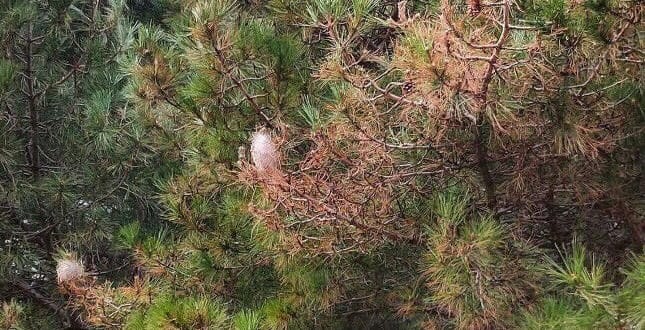
The stinging caterpillars.
Credit: Carol La Rosa – Shutterstock.
A natural phenomenon, caused by unusually warm temperatures, is increasing the number of poisonous caterpillars on the Costa del Sol.
Due to their tiny, venomous hairs, the long rows of caterpillars that devour pine needles pose a serious threat to humans and animals. The College of Veterinarians of Malaga warns of a need for prevention and management plans for these caterpillars. They can cause nasty symptoms to people or animals when they come into contact with their hairs. Dogs are at particular risk, as their curiosity leads them to try and sniff out the little furry insects.
The National Association of Environmental Health Companies, ANECPLA, calls for more council prevention plans to be implemented in spring and fall to minimize the harmful effects of processionary plague.
Councils take steps against the processionary catapillar
Malaga council began a biological treatment to prevent the proliferation of pine processionary cats in the spring in parks and forests in the suburbs of the city.
The pine processionary pest is a serious threat to humans and animals alike in the Malaga area. It is important that local authorities implement effective prevention and control campaigns to minimize its harmful effects.
Dog owners, beware of the processionary caterpillar
Advice for dog owners is to stay vigilant, particularly during late winter to early spring when these caterpillars are most active – around now, actually, since it’s February, 2025. Marbella se Queja’s social media platform warns that there are nests growing in trees around Santa Maria Golf and you should not take your dog in this area.
Credit: MSQ
Keep your dog on a leash or lead when you walk near wooded areas, pine trees and other places where critters may be. They often travel in long lines, or in silky nests on the branches. This is where they can fall to unsuspecting pedestrians.
If your dog gets too curious – sniffing, pawing, or, worse, trying to eat them – it can lead to serious trouble.
These hairs contain a protein which can cause irritation or allergy reactions. Direct contact with them is even worse. If you suspect that your dog may have come into contact with processionary catapillars, wash the area around the nose and mouth with cold water without rubbing. Consult a veterinarian if irritation persists.