Costa News Spain Breaking News | English News in Spain.

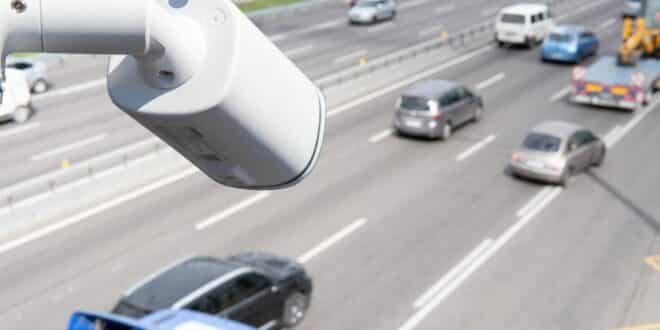
Spanish autobahns are now monitored by new roadside camera systems that monitor the driving behaviour of drivers.
Credit : Aleksandrkozak, Shutterstock
Since years, the majority of drivers have always had the same reaction. You spot a camera on the roadside, glance at the speedometer, see you’re within the limit… and relax. No tickets today.
This little relief could soon be a distant memory on some Spanish highways.
The DGT (Spanish traffic authority) has begun rolling out a brand new camera type that doesn’t really care about how fast you are driving. These cameras are designed to monitor how you drive and not how hard you push the accelerator. This is a surprise to many motorists.
There are already a few locations where the system has been implemented, mainly in the Community of Madrid. Although the rollout of the system is still very limited, it is clear that everyday driving behaviors, which many people don’t even think about, can result in a heavy fine.
These cameras aren’t looking for speed – they’re watching your manoeuvres
Unlike traditional cameras, the new systems do NOT measure kilometres-per-hour. They have a much more defined job. They are monitoring certain manoeuvres which are prohibited by Spain’s traffic laws but go unnoticed as there is not always a nearby police patrol to catch them.
Up until now, many of these infractions could only be penalised when an officer saw them at just the right time. This element of luck is eliminated with automated cameras that run continuously.
Four cameras are currently aimed at detecting drivers that cross a white line and two others check if motorists stop at stop signs rather than simply slowing down. It’s not a massive network yet, but it’s enough to start changing behaviour – especially for drivers who regularly use the same routes and may have picked up some bad habits over time.
This is not a national rule. In Spain, the 120 km/h limit on motorways remains. On certain stretches of road, the enforcement is more thorough than speed checks.
Cross a solid line or roll through a stop – and you could be fined
The main target is something that many drivers do unconsciously: crossing a solid, white line. The most common time is when you join a main road or motorway and enter the lane before the line breaks.
Although it might seem innocent, especially if traffic is light or the road is empty, breaking the rules still applies. When one of these cameras records the action, the system automatically starts the process to fine you. The penalty is clear: €200.
It is intended to discourage merging in places where visibility is limited and traffic is closely controlled. These small shortcuts could quickly lead to side collisions and sudden braking. This is what the DGT wants avoid.
Another behaviour that is being closely watched is not stopping properly at a traffic sign. Slowing down or creeping along is not acceptable. The law requires that you stop completely before continuing.
These cameras are used to check if the vehicle comes to a complete stop. In the event that it does not, an offence has been committed. This one could hurt you more than just your wallet. In addition to a fine and points, you may also lose your licence because intersection-related offenses are considered particularly dangerous. Some cases can result in a loss of four points.
This could be a rude awakening for drivers who “just ease through” quiet intersections.
Why the DGT has tightened the net on speeding
The main cause of serious accidents on Spanish roads is speeding, but this is not the only issue. Poor positioning, hurried decisions or drivers disregarding markings and signage are the main causes of many incidents that occur at low speed.
By introducing cameras that focus on these everyday behaviours, the DGT is clearly trying to influence how people drive on a daily basis – not just punish extreme cases.
It’s not just a theoretical issue. Automated system work 24/7, and are not dependent on patrol availability. This means that enforcement is more consistent. Drivers used to depend on the location of police officers. This strategy may no longer work.
The take-away for motorists is simple. The fact that you are driving under the posted speed limit does not guarantee you will avoid a fine. The importance of respecting road markings, stopping correctly and following rules to the letter is greater than ever.
The cameras are still few, but they represent a change in the way road safety is being managed in Spain. For many drivers, it will take a few unexpected fines for the new reality to sink in.