Costa News Spain Breaking News | English News in Spain.

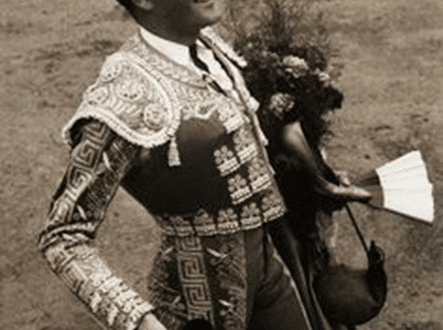
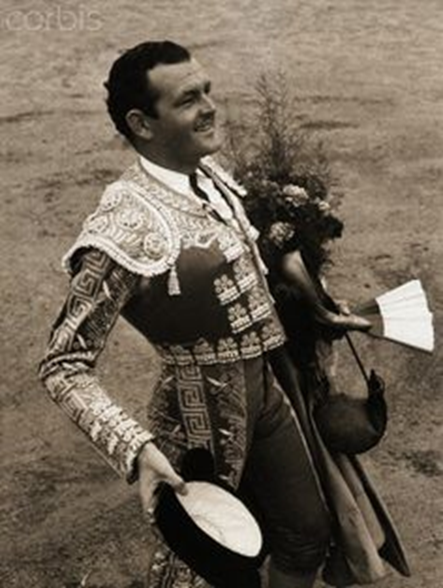
JOHN FULTON died on February 20th, 1998, aged 65. He left behind an impressive legacy of expats in Andalucia.
His story began in Philadelphia, in 1932. He was born to a blue-collar working class family.
Like millions of American boys, he read Ernest Hemingway’s ‘Death in the Afternoon’ and saw the Tyrone Power film ‘Blood and Sand’, becoming instantly fascinated by Spanish bullfighting.
READ MORE LIFE IN SPAIN: Lola Flores embodied the soul of Andalucia – but she was possessed by a demon
He did not just dream about adventure like the rest of them.
In his teens, he was drafted into the US Army and had the chance to travel to Mexico. He spent the rest of his time there trying his hand in bullfighting.
He soon realised that he was a gifted painter and had a real talent.
After his military service was over, he decided to make the life-changing move to Spain in order to open an arts studio and earn a living as matador.
He arrived in Algeciras in 1956, and while it took time to establish his credibility in a deeply traditional world, he finally took his ‘alternativa’ in Seville in July 1963.
READ MORE Frank Sinatra and Malaga
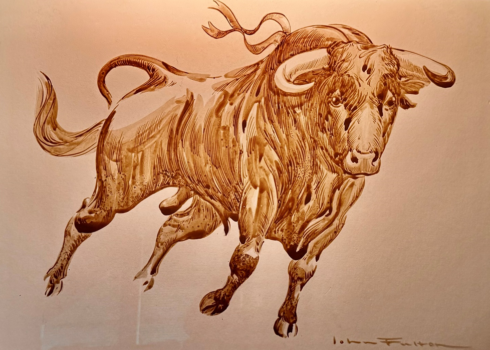
The equivalent of a doctorate from a university is deemed to be completing specialized training in bullfighting.
After years of training and facing bulls as a ‘novillero’ or apprentice, the aspiring fighter has a graduation ceremony known as the ‘alternativa’.
The other two bullfighters welcome him into the profession and he swaps the black lace of an amateur for a gold-filigreed suit of lights.
La Maestranza is the bullring in Sevilla, which is often referred to as the Wembley Stadium for the sport.
Any bullfighter who takes his ‘Alternatives to the Traditional Method of Getting a Loan‘ in another ring, such as Valencia, has to repeat it in La Maestranza before he is accepted as a true matador by the purists.
Fulton, who had moved to Sevilla and had his art studio near the cathedral, had the great honour of graduating at the most prestigious bullring in the world.
READ MORE LIFE in Spain: This work of art offers a look at some ancient Spanish traditions.
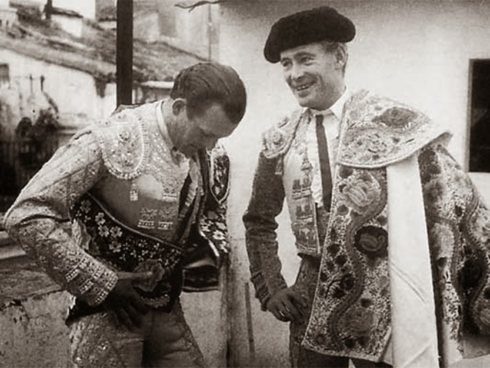
In the 1960s, and 1970s he had a double career, as a bullfighter, and an artist. He became one of the most well-known characters in the city.
It was during this golden era that the making of the 1962 blockbuster movie ‘Lawrence of Arabia’ presented director David Lean with serious logistical problems.
To shoot the Arabian scenes, old-fashioned architectural styles were needed that did not exist in the modern Saudi Arabia. It would have been extremely expensive and difficult to fake.
Sevilla proved to be the ideal location for the British film crew.
Due to its rich Muslim heritage, the city has authentic Arabic palaces. Both the Alcazar, and the Casa de Pilatos, were used in the film as stunning locations.
Fulton was a prominent English-speaking artist in Sevilla and naturally came into contact with the Hollywood Circus that had arrived.
READ MORE LIFE in Spain: Mozart, the bullring of today and Seville’s deceiver
During the filming of the movie, the American Matador developed a close relationship with Peter O’Toole.
Fulton managed to convince the charismatic actor on one memorable occasion to dress as a matador.
A tradition that dates back to 1700s says that a retired bullfighter cuts his ponytail as soon as he kills his last bull.
While modern fighters wear a small ornamental hairpiece, they still signal their retirement by removing it and brandishing a pair of golden scissors in a little ceremony called ‘cortar la cola’.
Fulton first faced a Bull in the tiny ring at San Miguel de Allende.
He returned in 1994 to end his epic transatlantic trip with a ponytail cut.
The Olive Press has more La Cultura News. Click here to read it.