Costa News Spain Breaking News | English News in Spain.

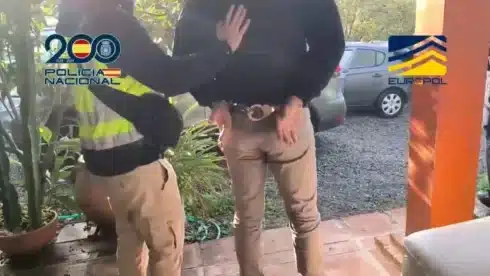
A RUSSIAN mafia group that laundered millions of euros for years in Spain for international criminal gangs, boasted of its contacts with ‘well-known Spanish politicians’ to help its activities.
Clients included big criminal organizations operating in Spain, as well other countries, such as the Mocro Maffia (Serbian and Albanian cartels), the Colombian cartels (Cartel de Colombia), the Armenian mafia clans, and even clans of Ukraine and China.
In January, a Policia Nacional probe that led to the arrest of the gang revealed that the members had contacted Cuban authorities to discuss plans to build solar farms on the island. They also claimed to be close to several Spanish politicians.
READ MORE

Operation Strongbox exposed the Cuban plan for a solar plant where the island’s government would pay the mafia in large quantities gold and nickel.
The investigation against the mafia crew discovered a sophisticated organisation that acted as ‘a genuine multinational money laundering company’, according to the Policia Nacional.
14 people have been arrested and properties searched in Madrid, Malaga, Marbella, Torremolinos, Coin, and Ayamonte as well as Lisbon in Portugal, with €1 million in cash seized.
The mafia was paying a Policia Nacional officer in Huelva to provide Spanish residency documents for its members who claimed they needed asylum because of the Ukraine war.
He also had ‘political contacts’, offering the mafia investments on the Huelva coast in land and hotel complexes.
It’s been calculated that the Russian network laundered roughly €2 million monthly for its clients, and was brought down after a two-year police probe.
The Policia Nacional has been monitoring several Russian organized crime members based in Spain.
The police soon realized that the cash they were distributing to different nationalities was illegally acquired.
The Russians in Spain helped gangs like the Mocro Maffia and the Colombian cartels move their capital across the globe.
The network mafia charged between 2% to 3% commission on each transaction that required laundering.
The mafia’s activities were revealed as the investigation continued.
The Netherlands, Estonia and Lithuania are among the countries that have a large footprint.

In Spain, they had offices in different cities, each of them managed by a ‘cashier’ who was in charge of making daily cash transactions, sometimes as much as €300,000.
In Spain, the police investigation revealed a monthly transfer of several millions of euros.
Each ‘cashier’ had a security safe, a high-capacity money counter and a soundproof cabinet where the counter could be kept to muffle its characteristic noise when counting banknotes.
Every time they made a money delivery, the ‘cashiers’ had to document the operation with a receipt for the mafia bosses.
They even set up a routine for each ‘cashier’ when they set up a base in a new city, and included fines if the rules were broken.
Security was strict, with houses and cars changed every few months and some ‘safe houses’ were used just for business.
The ‘cashiers’ also changed residence from time to time, instructing those who were going to replace them in their job on the proper way to make deliveries and keep money receipts.
Authorities found that all members of the Russian Mafia Gang had encrypted mobiles linked to one another, and they were blocked simultaneously when any member of the gang was arrested.