Costa News Spain Breaking News | English News in Spain.

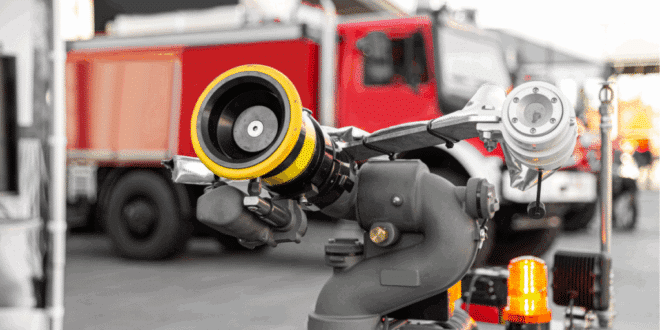
Not R2-D2 — just Italy’s fire-blasting turret. Credit: Canva
You imagine a firefighter wearing a helmet and a hose, running towards the smoke. This image is no longer the case in Italy. In 2025, Italy will not be fighting fires with its bravery but with robots. Italy has deployed the most advanced firefighting robotics in the world, from flying humanoids and tunneling tanks-like machines. These machines look like science fiction. Italy is quickly becoming a leader in the integration of robotics into firefighting. The impressive technology hides a more complex story about collaboration, trust and a shared goal of saving life.
Enhancing human abilities
Colossus was a tunnel rescue robot. It was a revelation for veteran firefighters: “It felt like I had an indestructible partner.” It sees and goes where humans can’t. These machines do not replace firefighters but rather support them. The firefighters say, “We make decisions. But the robot gives us greater options and more safety”. This sentiment is shared by many in the field. Shark Robotics conducted a study that found that although robots are capable of excelling in hazardous environments they lack the judgment and adaptability human firefighters. The real potential is in the relationship between man and machines.
Public perception of Italy
Italian public response has been overwhelmingly positive to these robot assistants. A survey done during the demonstrations of firefighting robots found that a majority expressed their support for its deployment, particularly when it correlated with increased safety for responders. Trust is key, as is transparency about the robot’s limitations and role. Naples resident, who commented: “It gives me comfort to know that robots are not substitutes, but tools.”
Robots in Action: Real-world Uses
Italy’s commitment to the integration of robots into emergency service is evident from several deployments:
- Colossus: Shark Robotics designed this robust robot that has been vital for tunnel rescue scenarios. The robot provides real-time feedback while helping with debris removal.
- Wolf R1: Magirus, an electric-powered vehicle, can traverse difficult terrains. It provides real-time visuals to the command centre and enhances decision-making in emergencies.
- TAF AirCore EmiControls’ turbine robots disperse water mist which suppresses the fires while keeping firefighters at an acceptable distance. Its deployment in Ukraine showed its effectiveness in high risk environments.
- Trypper: This modular robot was developed in Verona and can be used for many different rescue operations. From debris removal to firefighting it is flexible in times of crisis.
- iRonCub3: This humanoid robot, which is currently in the experimental stage, has jet engines and can jump to aerial assistance during an emergency.
This integration is not a technological wonder or an innovative project, but rather a collaborative effort. Italy said, “Every time that we use a robot, we are learning something new.” We teach the robot and it teaches you.