Costa News Spain Breaking News | English News in Spain.

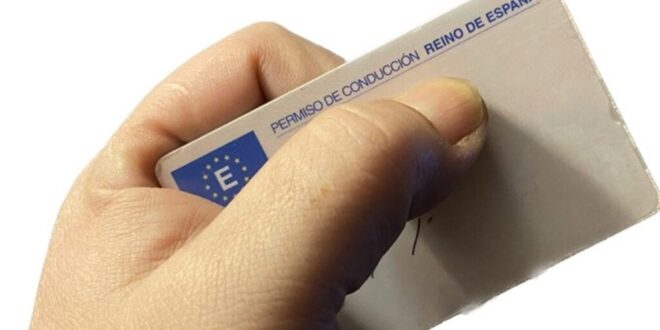
A close-up of a Spanish driving licence – here’s what you need to know about swapping your foreign licence for a Spanish one.
Credit : Credit: Jason696/Shutterstock.com
Are you thinking about switching your foreign licence to a Spanish driving license? You are not alone! Thousands of newcomers go through this process every year—and yes, it can feel a little daunting at first. Don’t worry: With a little preparation (and patience), you will be driving the Spanish roads within no time.
Here’s a quick guide to everything you need, in plain English. Ready? Read on and grab a cup of coffee.
Why change your driving license in Spain?
If you are only staying in Spain for a few days, then your foreign driving license should be sufficient. But if you’re setting up camp for a few months or longer (maybe you’ve got a job, you’re studying, or you just love the sun), you’ll need to make it official and exchange your licence—known here as ‘convalidar el carnet de conducir.’
Why bother? Driving with an invalid licence can result in fines, inconveniences or even invalidation of your insurance. It’s best to relax and get everything sorted.
What is the first thing you need to know? Can you really swap your license?
Sadly, not all licenses have the same value. Spain has agreements in place with many countries (including the majority of Europe, Latin America as well as a few other nations). You’re in luck if you are from one of these countries: you only need to submit paperwork.
Your licence must be from the country where you live. Without a doubt, You’ll need to take both the theoretical and practical driving tests in Spain if you have an agreement with another country (think of the US, Australia or Canada). There’s no way around this, I’m sorry!
Pro tip: Check the DGT (Dirección General de Tráfico) website for the up-to-date list, or just ask at your local traffic office.
Book your appointment
It’s not enough to just turn up at the DGT. You’ll need to book an appointment—called a cita previa—and there are a few ways to do it:
- Use the official DGT site. Your NIE or DNI is handy!
- Dial 060. (Basic Spanish is useful, but with a little patience and charm you can manage).
- The miDGT app is available for download. Download the app and make your bookings from your mobile phone.
Book early, especially in summer or busy cities. Book early to avoid disappointment.
What to bring with you
Organize all your paperwork neatly before you arrive at your appointment. Here’s a standard checklist:
- Original, valid driving license from your home country.
- Valid ID (DNI and passport for Spanish nationals, NIE if not).
- Certificate of Empadronamiento
- Medical certificate from an authorised centre (costs about €20–€50; it’s quick, honest!).
- Two passport photos
- Proof of payment of the DGT fee (currently €28.30—bring your receipt).
- Download or pick up an application form at the DGT office.
You may be asked to come back another day if you forget even one item. So double-check before you go.
How much does it cost to exchange a driving licence in Spain?
- Admin fee (DGT): About €28.30
- Medical check: Usually €20–€50
- Photos: Around €5–€10 if you don’t already have some
So, all in, you’re looking at €50–€90, depending on the region and where you get your medical.
How long will it take to complete the project?
The answer depends on your local DGT’s workload (and on how well you manage paperwork). Generally:
- From your appointment, you can expect to receive approval within 1 to 3 weeks.
- Another 2–4 weeks for your Spanish licence to arrive by post
It will take longer if your documents are missing or if something is wrong. Stay organised, and follow up if it seems slow—the DGT online tracker or miDGT app can help.
What could slow you?
- Documents that are incomplete or incorrect (the number one cause of delays!)
- Demand at local DGT office (especially in expat hotspots and just before summer holidays).
- You may need to undergo extra checks if you have a licence from a country that is “tricky”.
Top tip: If you are moving to a small city or town, it is likely that things will move faster than they would in Madrid or Barcelona.
Other useful tips from Expats
- Keep copies of everything—just in case.
- If you do not speak Spanish well, ask a friend to help or use Google Translate.
- Dress well and be polite. Your staff will be more willing to help you if they see that.
- Ask for help at your local DGT branch if you are having trouble booking online.
Spanish driving license: Are you ready to go?
You’ll be covered and legal with your new Spanish driving license. Enjoy the open road. You’ll be at ease whether you’re on a road trip along the coast, going out to tapas or running errands.
It’s not as difficult as you might think to exchange your foreign driving license in Spain. A bit of paperwork, some patience, and soon you’ll be on your way—¡buen viaje!