Costa News Spain Breaking News | English News in Spain.

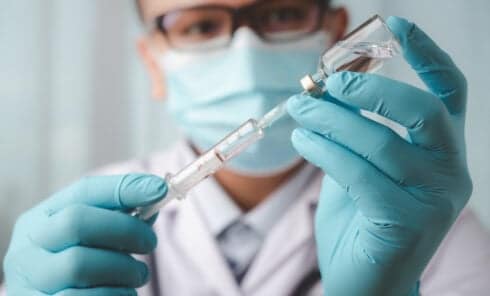
Researchers may have discovered a way to end needle fear.
Apparently, its official name is “aichmophobia”, but we all know it as ‘terror when faced with a needle-injection’.
It’s perfectly normal. Humans have evolved for millions of year to avoid having sharp objects penetrate our skin.
In the last century, science has developed a method to inject healing substances, via hypodermis, into our bloodstream.
We may laugh at the idea of a loved-one flinching from the syringe bringing a healing.
But it is not funny.
Diabetes is increasing in the population.
We all know that people who cannot control the sugar level in their bloodstream are at risk of a coma and even death if they do not receive daily insulin injections.
Insulin cannot be taken as a tablet by diabetics.
It is because the digestive system will break down insulin, thinking it was food. This is why you need to inject yourself intravenously every day.
However, scientists in Málaga may be on the threshold of a life-changing medical breakthrough.
The “innovative system”, which involves dissolvable patches and a through-the skin administration, is an effective and painless substitute for traditional injections.

Undoubtedly, the time in the doctor’s waiting room when the doctor approached with a syringe is one of those experiences that we remember as being utterly traumatizing.
Well, that situation could soon be consigned to the history books, thanks to a creation of researchers from the Málaga Biomedical Research Institute and the Nanomedicine Platform, who, in collaboration with Queen’s University Belfast, have developed a painless alternative to traditional injections: “An innovative transdermal drug delivery system” based on “dissolvable microneedle patches.”
The researchers have published their research in the International Journal of Pharmaceutics. According to the creators of the study, it opens up new opportunities for improving medical treatment because the controlled and sustained release of drugs is a major advance.
Microneedle patches that dissolve in the body are a relatively new technology. They allow for medication delivery through the skin, without the use of traditional hypodermic syringes or pain.
Our study has shown that it is possible for mesoporous silicon nanoparticles to be incorporated into these microneedles. This allows for a precise and sustainable release of active ingredients,” says Dr. Juan Luis Paris.
The discovery has been tested on neonatal pig skin – which is commonly used as a model for human skin – and on mice, but its discoverers clarify that in the future it would be desirable to test this system in humans to evaluate its therapeutic potential.
Paris, a member of the research group on Allergic Diseases to Drugs and Allergens led by María José Torres and Cristobalina Mayorga, adds that “it could have direct implications for dermatological treatments, vaccines, and the administration of personalised therapies.”

The tests confirmed that the microneedles disintegrated after “effective insertion”, and the nanoparticles “landed” within the skin. They also confirmed their ability to release therapeutic payloads in a sustained fashion.
The microneedles, which are too small to be detected by your nerves and therefore can’t cause pain, dissolve once they have delivered the medicine to the precise parts of your body that need it.
This development, explained the principal researcher, “brings one step closer to being able to administer treatment without needles in a more efficient and comfortable manner for patients.”
He said that “the ability of nanoparticles to be adjusted to the size of their pores allows us to modulate release of drugs in different sizes from small molecules to proteins.” This could be critical in diseases that need prolonged or customized dosages.”
The team at Malaga Biomedical Research Institute & Nanomedicine Platform has already explored new applications for microneedle pads, including their possible use in administering vaccines and targeting therapies for chronic disease.
Paris said that the goal was to optimize this technology which is in its very early stages to get it as close to clinical trials as quickly as possible.
READ MORE