Costa News Spain Breaking News | English News in Spain.

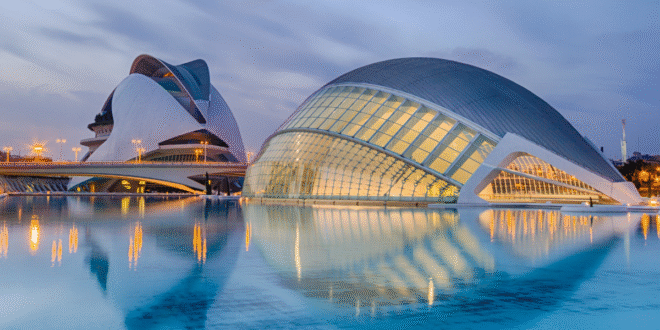
Europe’s tourism boom is a mix of modern icons and rising tensions. Credit: papagnoc via Canva.com. Pixabay.
Spain and France lead the way in a tourism revival that is breaking records. International visitors are expected to spend around €838 billion in this year. There is no shortage of travelers, overbooked hotels, and a booming travel industry. But, outside the headlines there is another story. Locals are preparing to face another type of summer rush in Palma and Malaga. There will be protest marches, housing crackdowns and a growing anger about the costs of hosting tourists.
Noise, overcrowding, high rents and other factors can all hinder the growth of tourism. What happens when the city is no longer a place where people live, but a product? It’s not a fight between residents and tourists; it’s about a city that is growing faster than they can cope.
Europe needs a lifeline for its economy
Despite all the tensions and demonstrations, we must not lose sight of tourism’s positive aspects. The travel industry remains an important economic pillar in countries such as Greece, France and Italy.
Only in Spain
- Tourism contributes The GDP of the country is 12%
- Directly supports more than 2.7 million jobs
- The sector is expected to generate $2.4 billion in 2024. €248 billion in total travel revenue.
Tourism is essential for many regions. Travellers in rural Andalusia or France’s Dordogne Valley keep family-run restaurants, artisanal markets, and small hotels alive.
While significant Investments are flowing into the country
- Spain Upgrades its rail infrastructure will better support tourism in all its regions.
- France Investments in greener transportation hubs will benefit both tourists and locals.
- The EU It helps destinations adopt a sustainable model by offering incentives for low-impact tourism and community tourism.
The issue is not only about jobs in Euros. When tourism is managed correctly, it can also be used to stimulate cultural exchanges, global relevance, as well as rural revitalisation. This will become more important as American travel declines and Europe takes back its place as the number one destination on earth. The solution to the problem is to not shrink tourism but rather to reshape. If done properly, tourism is not an invader, but rather a revival.
The numbers behind boom
According to the World Travel and Tourism Council, Europe is expected to reach €838 billion in international visitor spending this year, marking the highest post-pandemic figure yet. Spain alone is expected to bring in more than €113 billion, while France remains a magnet for global tourists, despite its recent unrest.
This is an amazing success story. After years in uncertainty, tourism is now the backbone for southern Europe’s economic recovery. It supports millions of jobs while keeping cash flowing into small businesses, high-speed trains, and airlines.
- In SpainTourism is on the rise, but is being countered with increasing economic pressure on everyday citizens. This includes low wages and housing shortages. It also leads to a growing discontent among residents about what they are actually there for.
- In FranceIt’s a movie that glorifies luxury tourism. But when it’s near scenes of social unrest it brings more attention to the simmering tension in its suburbs.
Europe’s economy is growing, but not all are benefiting. The disconnect is getting harder to ignore
The protest wave has spread across Europe.
Locals in cities such as Barcelona, Mallorca and Malaga, along with the Canary Islands are planning massive protests for June 15th. They will not be against tourists, but rather against the system which treats their cities more like theme parks. This time the banners will not say “go back” but demand change.
- Skyrocketing rents Due to Airbnb and short-term rentals saturation.
- Overloaded infrastructure during peak travel months.
- Erosion, In the past few years, many of the culturally rich and central neighbourhoods have become tourist-only zones.
Venice, Lisbon Amsterdam and Marseille are all experiencing similar concerns as residents protest against unchecked urban growth. They claim that they are losing their senses of identity and livability.
Even in Paris where the riots of this year are rooted in deep political unrest, it is clear that cities are much more than Instagram backdrops.
Locals pay more when they are priced out
Although tourism keeps economies afloat it affects the people that live there.
- Barcelona’s Airbnb-style rentals are up by 25% since 2022, and entire neighbourhoods are now short-term zones.
- Madrid This figure has risen to almost 50%. Long-term residents, particularly young people, are being forced out. Low-income families now compete with holidaymakers on space and affordability.
Many governments have responded to this issue.
- Barcelona will ban short-term rentals in 2028
- Lisbon has frozen all new tourist licences and important locations.
- Amsterdam, Venice and other cities have implemented tourist taxes, cruise ship cap and entry fees.
Tourism is back but for whom?
The tourism boom that Europe will experience in 2025 cannot be denied. The trains are full, beaches are packed and spending is soaring. For politicians and economists it’s an exciting comeback; for locals it’s a nightmare.
Under the glamourous headlines and bookings, many cities are torn, as they try to balance growth with livability. They must decide whether or not to welcome the world, while still allowing enough space for the people who live there.
There is still hope. It starts with smarter policies, more fair regulations and more thoughtful travellers. Tourism doesn’t need to be an enemy. It can be a bridge between cultures, economies, and ways of living.
Travel is a great way to meet new people and stay in touch with old ones.