Costa News Spain Breaking News | English News in Spain.

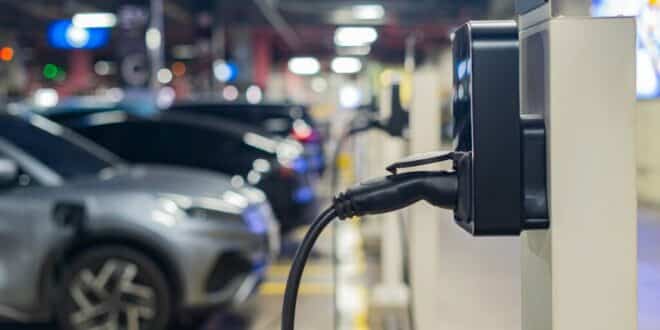
Some Spanish carparks restrict the use of electric vehicles because they are concerned about battery fires.
Credit : apiguide, Shutterstock
You’d expect older diesel cars to be turned away in Spain’s city centres – not electric ones. Signs have appeared in Madrid and some privately run facilities that ban all electric cars. Electric Vehicles The ban on car parks is due to concerns about fire hazards associated with lithium-ion battery.
These notices, such as one seen near Plaza de Tirso de Molina, in central Madrid warn drivers that “potential fire risks” prevent electric cars from being driven. According to reports, similar restrictions have appeared in some hospital parking lots where electric vehicle access has been restricted temporarily. It’s a move that’s raising eyebrows – especially at a time when Spain is actively encouraging the shift towards electric mobility.
Why do some car parks turn away electric cars?
It’s not the city councils that enforce Low Emission Zones. Urban traffic regulations are usually aimed at older cars with combustion engines. Private operators who manage enclosed parking lots are introducing these new restrictions.
Their argument is straightforward: If a fire breaks out in a garage that’s tightly packed, the results could be dire. And when it comes to electric vehicles, the main concern isn’t how often fires happen — it’s how difficult they can be to put out.
Some hospital managers take similar precautions and limit access to specific indoor areas because of the challenges that battery fires pose.
Are fires in electric vehicles really different?
In electric vehicles, the cause of a fire is typically the battery, which is integrated into the vehicle’s lower frame. A crash that causes a severe impact can cause the battery to be damaged, causing a short circuit. Faulty connections, cooling issues or problems during charging – especially with non-approved equipment — can also contribute.
The fact that battery fires are prone to re-igniting is what most worries the emergency services. Battery cells can generate heat after visible flames go out. Thermal runaway is a process that does not require external oxygen to occur. This makes it harder to suppress the fire.
Fire crews often need large volumes of water — not just to extinguish flames, but to cool the battery for a prolonged period. In some cases vehicles are submerged under containers of liquid to prevent them from reigniting. The toxic gases that are released in these fires require stricter safety protocol and longer intervention time.
Spain’s Electric Future: A Clash
Spain, along with much of Europe’s climate strategy, encourages drivers to switch to electric vehicles. Low Emission Zones in major cities are designed to phase out the most polluting cars – not discourage electric ones.
This is why some people think that parking bans are going in the wrong direction.
The decision is presented as risk-management for operators of enclosed parking lots. Electric vehicle owners may feel confused by the mixed messages. It can be frustrating to invest in an electric vehicle, only for it not to be available everywhere.
You can also read about the advantages of using Electric cars This debate will not fade as more cars are seen on Spanish roads. For now, though, some drivers may need to double-check the sign at the barrier – because in a surprising twist, the quietest cars on the road aren’t always welcome underground.