Costa News Spain Breaking News | English News in Spain.

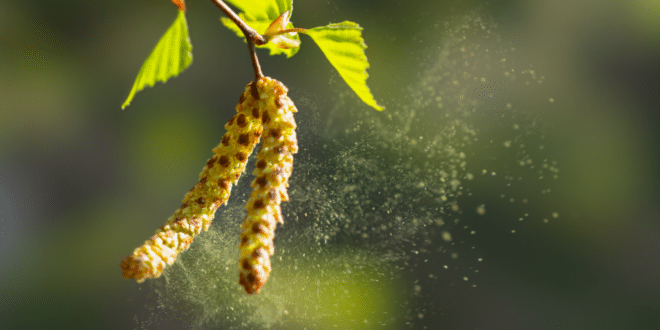
Pollen from hazel, plane, alder and olive trees is expected to arrive early in Spain. Photo credit: Igor Klyakhin/Shutterstock
Health and meteorological experts predict that Spain will experience higher pollen levels after the unusually persistent rains of recent months. Combining abundant moisture with rising temperatures will lead to ideal conditions for vegetation, causing many plants produce more pollen. This will heightened symptoms for people with hay fever and other pollen‑related allergies across much of the country.
The rain can reduce pollen in the air by temporarily washing the grains away, but the long-term effect of prolonged wet weather will be an explosion of new plant growth and a heavier release of pollen once the conditions warm up. In certain urban and rural areas pollen can break down into small allergenic particles which remain suspended in air longer and enter deeper into respiratory system.
Water reserves in the Iberian Peninsula’s south and central regions have led to an increase in the number of tree, grass and weed species. Pollen from gramíneas (grasses), olive trees and platanus (plane trees) is already abundant, and Experts warn that the current season could be more intense than in recent years.
Professionals explain the intensity of allergy season
Experts from the Spanish Society of Allergology and Clinical Immunology, as well as other medical professionals, have described this coming pollen season to be “intense” or “historic” for many sufferers. According to allergists interviewed by the national media about airborne pollen, it is likely that not only people with known allergies will be affected but also those who have never experienced any significant symptoms.
Regions including Andalucía and Extremadura are expected to see early pollen from alder, hazel and plane trees, while grass pollens may begin to appear in the interior and eastern areas. Pollen counts could be slightly higher on the Cantabrian Coast, which is usually low during winter.
In urban areas like Madrid, Sevilla and Toledo, it is expected that March will see higher than normal pollen counts, primarily from alders and early grasses. Provincial aerobiological networks warn that pollen concentrations could rise over the next weeks, increasing respiratory irritation.
Early pollination and rainfall
In two stages, rain can contribute to high pollen counts. Initial precipitation can provide short-term relief by cleaning the air. If the precipitation is followed by milder temperatures then moisture will promote vigorous plant growth, early flowering and a heavier release of pollen. The rain can also fragment pollen grains into microparticles that travel further and penetrate the respiratory system to intensify allergic reactions.
Stress and symptoms on services
Pollen allergy symptoms include sneezing and nasal congestion. Other common symptoms are itchy, watery eyes and coughing. The number of consultations with allergy specialists and clinics has increased. Patients are reporting symptoms earlier in the season than usual and experiencing longer discomfort.
Advice for expats and sufferers in Spain
Preparation can help residents, and expats in particular, who suffer from hayfever to cope with this intense pollen period.
- You can monitor pollen forecasts using the official aerobiological systems or apps that provide daily pollen counts.
- Follow the advice of a pharmacist, allergist or GP to start taking preventive medications early.
- Keep your windows closed during the night and at peak pollen times (typically in the early morning).
- Protect your eyes and lungs by wearing sunglasses or masks when outdoors.
- After outdoor exposure, wash your hands, face, and clothes to remove pollen particles.
- Plan outdoor activities during times of lower pollen levels (often following heavy rains or in the late evening).
Medical professionals may also recommend Talking to a pharmacist or an allergologist in your area about tailor-made treatmentsConsider allergy testing, especially if symptoms are severe and unusual.
Look forward
Pollen releases are usually at their peak in the spring. However, unusually warm winter temperatures and unseasonal rain can cause allergy symptoms to appear earlier or last longer. Experts say that climate changes can lead to unpredictable, early, or intense patterns of pollen, which is a growing threat to public health.
In preparation for the early pollen rush, Spain is urging sufferers to be vigilant, to prepare medications and to monitor forecasts in order to minimize exposure and manage symptoms.