Costa News Spain Breaking News | English News in Spain.

MARBELLA’S name has long conjured visions of a picture-perfect city of gleaming yachts, designer boutiques and luxury hotels… all with an endless stream of celebrity sightings.
This undeniably glamorous image still pulls in a certain crowd – but a deeper, more compelling story starts to unfold for anyone willing to look beyond the obvious.
As we approach the summer, this ‘sun-drenched jewel’ (as it likes to call itself) offers an experience that’s richer and more nuanced than its reputation might first suggest.
You’ll find that Marbella has not changed much over the years.
Casco Historico is the old town. It’s a maze of streets with cobblestones. Some are even older. Their 16th century origins can be seen etched in every wall.
You will find hidden along narrow streets, modern art galleries bursting with contemporary, fresh creations. They sit comfortably next to traditional tapas bars that are always busy, even with the summer tourists.
Hip boutiques, like long-established Deja Vu, and artisan ice cream parlours invite you for a leisurely exploration – it’s like a treasure hunt for unique finds.
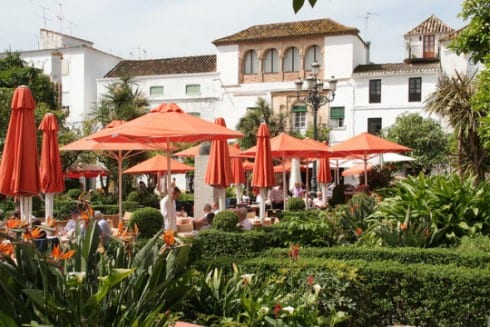
Plaza de los Naranjos is located in the historical heart of the city. Its orange trees are a beautiful backdrop to countless selfies.
Locals and tourists enjoy the attractions of this charming square.
The town hall from the 16th century dominates and is a witness to hundreds of years of change. Although the immediate area might be a bit on the pricey side, the pure immersion in historical ambiance makes it worth the money.
The Ermita De Santiago (originally a mosque) offers a quiet sanctuary to reflect.
Just around the corner, the Church of Our Lady of the Incarnation, dating back to 1618, with a stunning Baroque entrance, houses an organ of remarkable complexity – we’re talking 5,000 pipes of pewter, copper, and wood, all played with four manual keyboards.
This is a marvel!

Marbella’s roots go back a lot further than that. Roman times, in fact.
Visit the ancient Roman Baths in Guadalmina. These powerful remains of a sophisticated civilisation stand proudly next to a 18th century defensive tower.
The 6th-century Visigothic cathedral, located along the San Pedro beach in nearby San Pedro, provides a fascinating look into the religious diversity of the area.
Romans settled in the area as early as 1 AD. Their legacy is still woven throughout the town.

If you look closely, you can even see a 1st century Roman bridge within the Hotel Puente Romano. The villa site in Rio Verde, nearby, boasts an impressive mosaic, which was restored recently after thieves stole the central Medusa-head motif.
Marbella Club’s sister hotel in history is not as old but it still exudes old-world glamour. Its gardens, which were first planted in 1950, have seen everyone from Elizabeth Taylor and Bridget Bardot adorn its walls.
In the 1960s, this place was the go-to spot for celebrities and the rich. It was set up by German aristocrat Alfonso Hohenlohe. In the summer, there is no better place to experience it than its historic bar.

Marbella’s gardens are there to embrace you if the history of Marbella begins to fade.
La Constitucion park and Alameda Gardens in the centre of the city offer a cool respite to the hot sun, with trees that shade them, such as the Jacarandas whose purple blossoms light up the skies in late Spring.
These are the places where locals often gather, especially during feria – though I’m afraid you’ve just missed it; it wrapped up on Sunday! – while cafes and bars offer the perfect spot for a refreshing drink.
Marbella is known for its stunning 27-kilometre coastline. The shore is a paradise for everyone. From the sandy beaches of Artola and Elviria (beware of the nudists on the western end of the beach, while Cabopino is a popular destination with families), to the palm-lined paradise in central Marbella. The local beaches offer the perfect getaway, whether you want to spend a lazy day in the sun, take a refreshing swim in the clear waters, or enjoy a beach yoga class.
Puerto Banus in Marbella, the district known for its unapologetic excess, is still a spectacle. Bookmarking one end of the ‘millionaire’s row’ of the Golden Mile, Banus is where the ‘anything goes’ philosophy of Marbella really takes hold. From jubilant hen parties celebrating the final throes of ‘freedom’ for the bride, to members of the ‘1% club’ disembarking from superyachts and Ferraris, the people-watching here is a sport in itself, easily rivalling the vibrancy of Mayfair or Malibu.

Private jet brokers serve the ultimate in high-flying dreams. Luxury brands are lining every thoroughfare. Banus is an unashamed melting pot for the rich, the famous, and those ‘Marbella Love Islanders’ wannabes, who, clad head-to-toe in designer attire, flow through the port, especially around exclusive nightclubs like Le Suite and Roberto Cavalli.
Just be warned, a round of drinks here could easily gobble up your weekly budget – a small price to pay, perhaps, for mingling with Marbella’s elite.
Marbella has always been a magnet for the most influential personalities in the world.
Since long, members of the Saudi Arabian Royal Family, including Lord Alan Sugar and Simon Cowell, have owned villas in Marbella. Spotify’s Daniel Ek, along with his deputy, have also joined the list of Marbella’s most prestigious residents. Eva Longoria and Novak Djokovic are now among them, as well as footballer Eden Hazard.
Its magnetic charm has attracted world leaders, including David Cameron, Tony Blair and Michelle Obama. Former Spanish Prime Minister Jose Maria Aznar maintains a Guadalmina villa.
Discovered
Marbella’s status as a grand resort traces its origins back to 1946, when German Prince Maximilian de Hohenlohe-Langenburg and his aforementioned son Alfonso ‘discovered’ it quite serendipitously during a Rolls Royce breakdown.
Alfonso’s fascination was such that he built a house and bought land. He then sold plots to other friends, including the Rothschilds & Thyssens as well as members of the jet-set like Ava Gardner & Laurence Olivier.

The Marbella Club on the Golden Mile is home to many stars, including Lady Gaga, Tyson Fury and James Hunt.
The thriving culinary scene in Marbella will tempt you if the rich tapestry, the beaches, or the social scene isn’t enough. Marbella is home to a notable collection of Michelin-starred restaurants, making it an essential pilgrimage for any self-proclaimed ‘foodie’.
Despite the controversial decision by local chef Dani Garcia to return his three Michelin Stars just days after he won them a few years ago, two restaurants still have their Michelins.
Marcos Granda is one of them. His Skina restaurant has already won two Michelin Stars, and it’s expected to win a third next year.
Chef Mauricio Mauricio has created a menu with a strong global influence, and Messina is one of the restaurants that holds a Michelin Star.
Nintai is another must-visit restaurant, with a Michelin Star. It offers a Japanese omakase, prepared in front of you, that’s exquisite.
BACK is a new addition to Marbella’s stellar line-up. It also boasts a Michelin Star and offers a modern bistro style approach to Andalusian food under the expert guidance Chef David Olivas.
Marbella is a city that lives up to all its names. It has a thriving nightlife, an arts scene in bloom, and some the best food in the region. So, the next time its name pops up, just remember – it’s far, far more than simply a playground for the rich and famous.
This is a vibrant mix of history, culture and natural beauty. There’s also an irresistible culinary scene.
READ MORE:

Find Tailor Made Travel
Simply Holiday Bookings offers a wide range of personalized vacation experiences.