Costa News Spain Breaking News | English News in Spain.

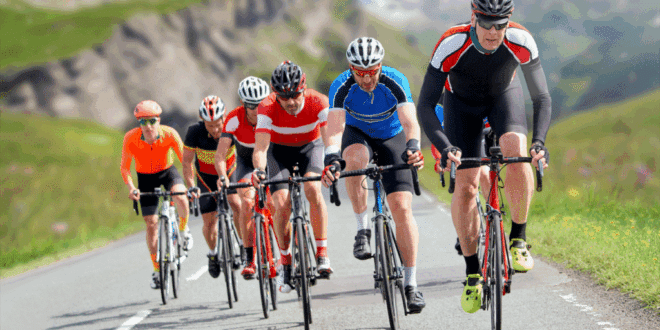
Many cyclists believe that the environment they ride in is a major influence on their behavior. Photo credit: Duncan Andison/Shutterstock
Spanish culture is based on cycling, as both a form of transportation and recreation. Cycling is a common sight in Andalusia and the Pyrenees Mountains. There has been a growing debate over the behavior of some Spanish cyclists. This includes road manners and group formations as well as interactions with motor vehicles on main roads.
Road Manners and Group Riders
Organisation and Safety Concerns
The apparent lack of a unified approach to the problem is one of the most common concerns. lack of road manners among some Spanish cyclists. Observers reported riders weaving unpredictable between lanes and failing to indicate intentions. They also report that some ignore traffic signs. Most cyclists follow the rules, but a small minority of them can cause danger to themselves and others. These risks can be exacerbated by group rides. Many cyclists ride loosely and disorganized, often taking up multiple lanes along main roads. This can cause traffic to be disrupted, forcing motorists to perform risky overtaking maneuvers. The Directorate-General for Traffic has repeatedly reminded cyclists The road rules for large groups of riders must be followed.
Road Safety: Avoiding Risky Behavior
Interactions with Motor Traffic
You can also find out more about the following: interaction between cyclists and motor vehicles The issue of avoiding traffic is still a serious concern. Cycling on narrow country lanes or without designated bike lanes forces cyclists to ride very close to the traffic. This closeness increases the chances of accidents, especially when vehicles overtake in unsafe circumstances. The rural Spanish cycling studies have shown that cyclists often adopt unsafe behaviours like occupying the center of the lane and failing to signal. Both of these can be dangerous for themselves as well as drivers. These actions, while sometimes a result of insufficient infrastructures, contribute to the perception that cycling is reckless.
Moreover, visibility is an important safety factor for cyclists. Many Spanish roads do not have reflective markings for cyclists. Others fail to wear high-visibility clothes or use their lights when it is dark. Inadequate infrastructure combined with unsafe riding can increase the risk of accidents, especially on busy roads at peak traffic times.
Experiences for Drivers
The Road Ahead: Challenges and Opportunities
Several Spanish drivers have expressed frustration over the unpredictability and inconsistency of cyclists. Many drivers complain about sudden lane changes, unclear traffic signals and cyclists occupying too much space. These behaviors, combined with fast-moving vehicles, can increase stress for drivers, and the likelihood of an accident. Some motorists claim that cyclists’ perceived lack of discipline contributes to an overall safety issue. This makes it difficult for both parties on the road to coexist in harmony.
One driver explained: “I’ve been on country road and instead of going in single file, they were next to each other making it impossible for me to overtake. Even when pointed out, they get aggressive. It is very dangerous. It is so dangerous.
The authorities also note that some of the problems are due to insufficient cycling infrastructure and limited enforcement. DGT, local councils and other organizations have run campaigns to inform drivers and cyclists of road safety. But gaps remain in many areas, including rural or suburban regions where there is a high level of cycling and the roads are narrow.
Perspective of Cyclists
Riders’ Responses
Many cyclists claim that the environment in their which they ride is a major influence on their behavior. Riders are often forced to adopt positions that may seem dangerous to motorists due narrow roads, insufficient bike lanes and traffic congestion. Andalusia rider: “There are not many dedicated lanes on the road, and it is often narrow and crowded.” Sometimes you need to ride in the middle of the street to avoid accidents and stay visible.
The interactions between cyclists and drivers can also be hazardous. Impatient or aggressive drivers can place cyclists in dangerous positions and make it difficult to ride cautiously. Many cyclists advocate improved road infrastructure including wider bike lanes, clearer signage and greater public awareness campaigns in order to encourage mutual respect among drivers and riders. They stress that improving road safety and reducing accidents requires fostering understanding between drivers and cyclists.
Important Points
- Spanish cyclists are often criticised for bad road manners. This includes weaving, unclear signalling and sometimes disregarding traffic signals.
- Group rides may be unorganised, occupying multiple lanes and creating hazards for cyclists as well as motorists.
- The proximity of traffic and the limited visibility on main roads can increase the risk of collision.
- Cyclists cite infrastructure problems and aggressive drivers among the factors that contribute to their frustration.
- Improved cycling lanes and education are among the solutions that can be used to increase safety for road users.
Improve Safety
Road safety experts In order to address these issues, it is necessary to combine education, enforcement, as well as infrastructure development. The cyclists need to be guided on safe riding techniques, and drivers should be reminded that they have legal obligations in sharing the road with bicycles. The implementation of dedicated cycling lanes along busy rural and suburban routes can reduce conflict and improve safety.
In addition to the infrastructure, a cultural shift on the roads is necessary. Both cyclists, and drivers, must develop mutual understanding and respect. The reduction of accidents and tensions can be achieved by campaigns that promote courteous behavior, the adherence to traffic laws, and awareness about each other. Encourage group rides that maintain orderly formations, and educate cyclists about how to safely navigate major roads can also help improve overall road safety.