Costa News Spain Breaking News | English News in Spain.


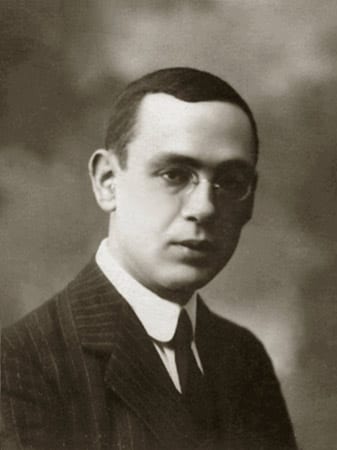
BLAS Infante Vargas Perez had just turned 51 years old when he was killed on the dusty roads to Carmona. He was a victim of Spain’s descent in civil war.
Infante, born in Casares on 5 July 1885, is still remembered for his life and death. He was tragically killed between Gaucin & Estepona. This summer marks the 140th anniversary of his birth – a fitting moment to remember the man now known as the ‘Father of Andalucia’.
Infante was raised in humble surroundings. In order to avoid financial hardships, Infante decided to educate himself. He passed his law exams in 1906 as a private student and qualified as a Notary Public in 1909 – a role that in Spain is held in high esteem, unlike its largely honorary counterpart in Britain.
Infante was a political activist, but not a radical. Rather, he was a regionalist with a clear vision: that Andalucia had its own identity, culture and historical legacy – one that deserved to be recognised and respected. He never called for independence nor supported the separatist movements of Catalunya and the Basque Country. His loyalty was to Andalucia. It was the place where he believed Europe and Africa once flourished.
Infante, in an age when Spain was often turning its back on the Islamic past of its country, urged for a different course. He argued that the legacy of Al-Andalus – its art, agriculture, language, and music – was something to be celebrated, not hidden. In flamenco and local dialects as well as rural customs he could see echoes.
In January 1918 Infante organized a historic assembly of southern intellectuals at the Casino in Ronda. In Ronda, Infante presented designs for the green-and white Andalucian Flag and regional anthem. Both were enthusiastically embraced. This meeting was the beginning of Andalucian regionalism, with Infante as its symbol.
Later, he established the Centros Andaluces to spread his message and the Junta Liberalista as a platform for decentralisation. In his book Ideal Andaluz published in 1915 he outlined in detail his vision.
However, the political climate was becoming increasingly polarized. Between the two World Wars, ultra-nationalist and authoritarian sentiments grew. Reactionaries were outraged by the growth of democracy in Spain and the growing assertiveness of its regions. Where some saw Infante as a visionary intellectual, others – especially on the far right – painted him as a dangerous subversive.
READ MORE
Sevilla fell to Franco’s forces in July 1936 when civil war began. Infante was arrested in Coria del Rio on August 2, 1936. He lived nearby. He was denied any legal procedure, held without charge and then executed by firing-squad on August 11 after being driven out of the city a few kilometers. According to some witnesses, his final words were ‘¡Viva Andalucia libre!’ – Long live free Andalucia.
A monument is located today near Sevilla airport at the location of his execution. The inscription reads simply: “Father Of Andalucia”.
His dream – of a pluralist, self-aware, and culturally confident Andalucia – did not die with him. His ideas, long suppressed by Francoist rule in Spain, re-emerged following the return of democracy.
In 1981, Andalucia was officially recognised as an autonomous community, and its flag and anthem – both drawn from Infante’s designs – were formally adopted.
Blas Infante is a symbol of dignity, not division: a man that imagined a Spain richer and more inclusive. Stoic and dignified, he is not only a member of Andalucia but also the conscience a nation that still struggles with its history.
Click here for more Spain News by The Olive Press.