Costa News Spain Breaking News | English News in Spain.

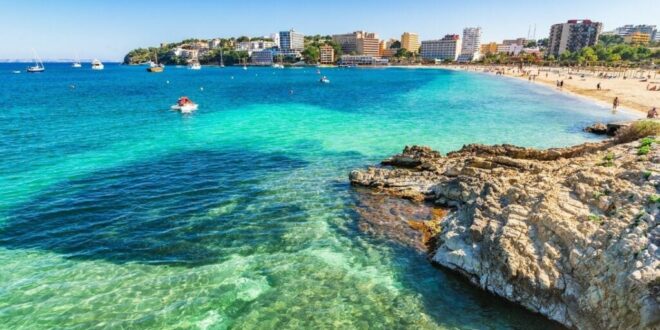
After years of economic stagnation, German tourists are finally feeling the effects of MALLORCA’s transformation as a luxury destination.
For decades, tour operators have relied on the stark difference between British holidaymakers – notoriously price-sensitive – and their German counterparts, who were willing to pay premium rates for their Balearic getaways.
The dynamic has changed dramatically in Germany as the country struggles to cope with economic headwinds, which are straining household budgets.
READ MORE ‘Tourism is not misery, it’s the engine of solutions’: Mallorca minister fumes at graffiti on official building
German economy is particularly slow. Industrial output has declined and consumer confidence has been shaky due to many factors.
German families are now less able to afford holidays due to rising energy prices, deindustrialisation, and inflationary pressures. This has led Mallorca’s skyrocketing prices to feel prohibitive.
German arrivals to the Balearics fell in both May and June 2025, marking the first significant decline after two years of record-breaking growth, with arrivals jumping 7% in 2023 and 9% in 2024 – pushing total numbers above five million for the first time.
In 2025, this trend is expected to reverse as the costs of tourism on the island are increasing.
READ MORE ‘Be curious, not careless’: How to avoid cold shoulder from fed-up locals in Mallorca this summer
Holiday prices increased by 33% between 2022 and 2023, while hotel rates rose another 19% from 2024 to the year before.
Average hotel rates now stand at €209 per night, representing a painful outlay for middle-class German families already feeling the pinch at home.
Spain’s national tourism body Turespaña had sounded the alarm before the 2025 season began, warning that German bookings to Mallorca were showing sharper declines than any other Spanish region.
After two years, German demand for package, flight, hotel, car rental and other services has been unable to tolerate price increases. The organization noted that, while arrival numbers would remain significant, there was a “more sensitive market to price trends.”
READ MORE Revolts in Spain’s Mallorca over new law set to ‘transform island into developer’s paradise’
The warning turned out to be prescient.
At Berlin’s ITB travel fair in March, tour operators reported increased German interest in cheaper destinations as alternatives to what they dubbed the ‘new luxury Mallorca.’
Pedro Fiol is the president of the Balearic Islands travel agents association. He blames the price hikes for the drop in tourism, and dismisses the idea that protests against tourism have discouraged visitors.
“There are signs that the main markets are tired.” Fiol stated that “the supply does not meet the needs of core customers.” Fiol also noted that price-sensitive tourists, including those from Spain, are becoming more aware.
READ MORE Mallorca hotels fight back against ‘tourismophobia’ in new campaign welcoming foreigners
The industry professionals believe that the July and August statistics will confirm this slowdown. They also predict that there will be a consolidation of concerns over an over-dependence on markets traditional, which has been recognised by tourism authorities as both a strength AND vulnerability.
The decline does not affect all markets equally. France and Italy both saw a 30% increase in arrivals, while Scandinavian countries experienced a 40% increase. However, these remain niche markets – France, the largest alternative source, still sends only a third of the tourists that Germany and Britain combined deliver.
Overall foreign tourism to the Balearics increased by 3% in June despite the declines of Germans and Brits. This suggests that Mallorca’s transformation into a luxurious destination is attracting visitors with higher spending, even though it may mean fewer arrivals overall from its most reliable source.
Click here for more Mallorca News at The Olive Press.

Discover Tailor-Made Tours
Simply Holiday Bookings offers a wide range of personalized vacation experiences.