Costa News Spain Breaking News | English News in Spain.

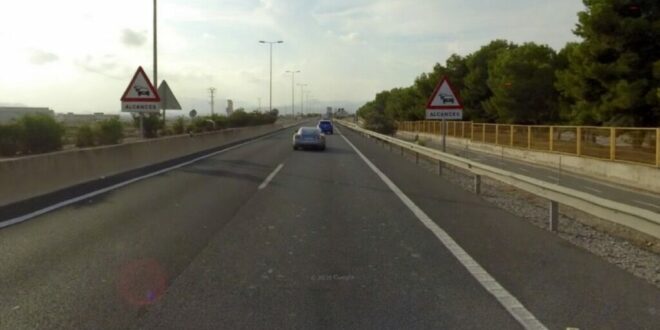
Spain’s first holiday after Christmas, 2026 Easter holidays saw cars packed with families driving to the coast for some relaxation and rest. The long hours spent negotiating curves on motorways, traffic bottlenecks and asking “Are we there yet?” The danger of a prang or sudden hard brake on a long drive is at its highest during what the Spanish refer to as “operación salida”.
Unsettling black spots, where accidents are far more common than the national average, have been highlighted in a major new study. Knowing which roads are the most dangerous is important for drivers.
Extreme danger 295 km
Analysis by Automovilistas Europeos Asociados (AEA) There are 295 kilometers of conventional and dual carriageways on 67 routes across 45 Spanish provinces that drivers should be aware of. The average danger index of these stretches was at least 10 times higher than that of the national average from 2020 to 2025. In these zones, the authorities counted 1,752 accident deaths totaling 2,497. These statistics show that despite improvements to the Spanish road infrastructure, there are still serious safety issues. The conventional roads are still more dangerous than high-capacity autobahns.
The A-77a’s zero-kilometre accident is the most serious.
The data shows that the A-77a dual-carriageway’s kilometre zero in Alicante is the location with the most accidents on the Spanish state road network. In the span of five years, 93 crashes and 141 deaths were recorded by officials. There is no other stretch that can match this sheer volume of crashes and injuries.
Severity is also closely followed by nearby sections. On kilometer 15 of the T-11, near Tarragona, there were 85 accidents and 103 victims. Kilometre 12, near Mos in Galicia on the A-55, also has a lot of accidents. There were 95 victims and 57 accidents. Alicante Province, however, is not the worst place in Spain to drive.
Asturias has the highest road risk relative.
Some conventional roads are more notable for their extreme peril index than the sheer number of kilometres. Peril levels are registered at the N-632 kilometres between Villaviciosa, Asturias (km 55) and Gijon (km 59), which connects them. 167 times Above the national average These elevated ratios are indicative of serious design or usage issues that need urgent attention.
Toll motorways harbour hidden dangers.
Black spots are also present on high-capacity toll road. The AEA’s researchers identified around 100 motorway segments with danger indices more than twice the national average. The areas in question were the site of 502 accidents, resulting in 846 deaths.
The kilometer 17 of the AP-41 motorway toll in Toledo is particularly notable. Its danger rating reaches 74,3, exceeding the national benchmark of 16 by a factor. It is possible that repeated incidents are caused by a combination of high traffic volume and layout issues.
Black spots persisting in the skin?
Experts from AEA compiled these findings using the official Mean Danger Index based on state road data between 2020 and 2025. The organisation encourages drivers to be extra cautious in zones identified while pressing regional authorities and national authorities to eliminate hazards that have been present for a long time through engineering works, better signage and speed management.
Spain has one of the best records for road safety in Europe. However, these high-risk areas are concentrated and could be improved with more investment. Drivers can save lives by staying alert, observing speed limits, and planning routes that avoid trouble spots.
The roads of Spain may be frightening to those who have never driven on them, but in 2026 they will not be the most dangerous in Europe.
The most dangerous driving countries in Europe
Top 10 European Countries With Highest Road Fatality (approx. 2024 data, deaths per million inhabitants)
- Serbia – 78. The top driving dangers in Europe. The high rates are due to the busy rural roads and difficult highways such as the Ibar Highway.
- Romania – 77 (2024) / around 68 (preliminary 2025) – Frequently ranks among the worst in the EUPoor road quality, especially in rural areas, can increase the risk of accidents.
- Bulgaria – The rate is consistently high. In the south-east, it is well above average.
- Greece – around 64. The risk level of this country has increased or fluctuated.
- Croatia – around 62–67. Groups with other high rated southeastern countries both in EU and broader European assessment.
- Portugal – around 60. Appearance in extended high-risk groups for southern Europe.
- Italy – around 51. The average for the EU is higher than in the UK, despite the advanced infrastructure of some parts of the country.
Generally, they are below the top cluster. Non-EU nations like Montenegro and Moldova can sometimes show higher rates in WHO or global statistics. However, comprehensive pan-European comparative studies focus heavily on those above.