Costa News Spain Breaking News | English News in Spain.

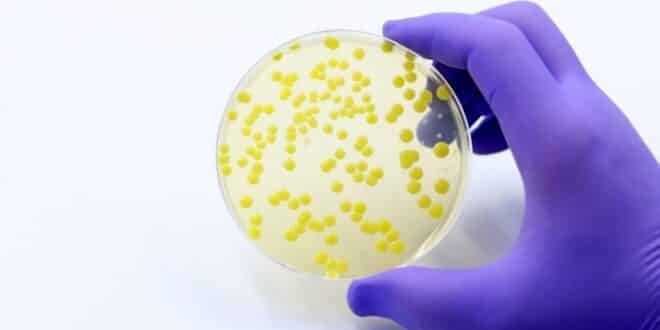
Bacteria on a petri dish. Credit: TopMicrobialStock, Shutterstock.
According to researchers from the Massachusetts Institute of Technology, artificial intelligence (AI) could create two new antibiotics which can kill drug-resistant Superbugs including gonorrhoea or MRSA.
The study was published on August 14, 2009. CellIt was revealed that the AI created the drugs atom by atom, before they were successfully tested in lab settings and on infected mouse models. Researchers say that this could be the start of a second golden age in antibiotic discovery. Human trials are still years away.
Antibiotic Resistance is a global threat. It causes five million deaths per year. Overuse of antibiotics has led to a worrying evolution and resistance by bacteria.
How AI might be able kill superbugs
The MIT team used data from different bacteria to train their AI system. They also fed it chemical structures and effects of compounds. The programme then searched through more than 36 million potential molecules – many of which do not yet exist – to design new antibiotic candidates.
Two approaches were used. One created molecules from chemical fragments while the second gave AI complete creative freedom. The system eliminated any molecules that were similar to existing antibiotics, or predicted to be toxic for humans.
According to the research, the team screened over ten millions chemical fragments by using genetic algorithms. Seven of the 24 compounds synthesized showed selective antibacterial properties.
The final shortlist produced NG1, which targets gonorrhoea, and DN1, which targets MRSA (methicillin-resistant Staphylococcus aureus). Both antibiotics appeared to be structurally distinct from the current ones and both worked by disrupting bacterial membranes.
NG1 has been shown to reduce bacterial load in mice. Neisseria gonorrhoeae DN1 was more effective against MRSA skin infections in the vaginal infection models, while DN1 was most effective against MRSA vaginal infections. Researchers claim that the two compounds are different in their mechanisms of action, and they could be used to “map uncharted chemical spaces” when searching for new antibiotics.
“AI can help us come up with molecules quickly and cheaply, which will expand our arsenal and give us a real leg up against superbug genes,” MIT Professor James Collins said to the BBC.
Aarti Krishnan is a MIT postdoctoral researcher who was one of the lead authors in the study. Sky News“We wanted anything that looked like an antibiotic to be thrown out, in order to address the antimicrobial crisis in a fundamentally new way.”
The road to clinical application will be long. Dr Andrew Edwards of Imperial College London warns that safety and efficacy testing is an expensive, and often unsuccessful process.
Even if new drugs prove successful in trials, experts point out a major commercial challenge. They note that antibiotics should be used sparingly so as to preserve their efficacy, which limits profitability for pharmaceutical firms.
AI: the solution to the antibiotic crisis?
All health and beauty related news.
See all the latest breaking news.