Costa News Spain Breaking News | English News in Spain.

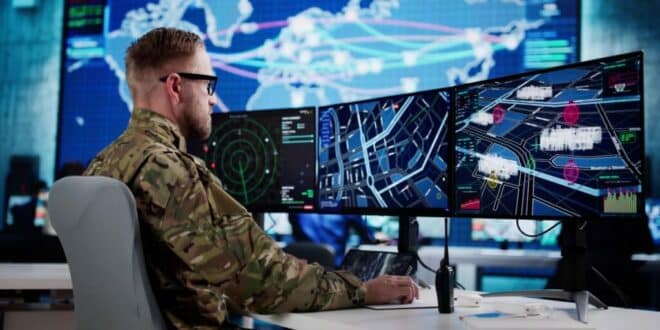
AI on the battlefield Credit: Andrey_Popov/Shutterstock
As is the case with most things, it starts off as a whisper, which sounds like an advertisement for Netflix.
An AI model. A covert mission. Nicolás Maduro. In the background, there is a language-model quietly analysing data, while humans are making very human decisions.
Reports of a rash of incidents have surfaced. citing The Wall Street Journal, that the US military may have used Anthropic’s Claude during a January 2026 operation targeting Nicolás Maduro, the reaction oscillated between fascination and mild alarm. Silicon Valley meets the special forces. What could go wrong?
Anthropic nor the Pentagon have confirmed specifics about operations. To be fair, this is not uncommon when military operations are concerned. It’s precisely the lack of clarity that is fueling the wider debate.
For Europe, it’s not another episode of American tech-drama.
This is a preview.
No, it’s not a robot with rifle
Let’s be clear about one thing. Claude is not wearing night-vision goggles or fast-roping from helicopters like ChatGPT.
Large language models don’t “pull triggers.” They are information processors. They summarize. They model scenarios. They can spot patterns that humans would need weeks to sort through.
This could be:
- Digesting vast intelligence reports
- Finding anomalies in satellite feeds
- Simulations of operational scenarios
- Stress-testing logistics plans
- Modelling risk variables
Think less Terminator. Instead, think of a hyper-caffeinated analyst that never sleeps.
It’s possible that AI can influence decisions to lead to force even if it doesn’t actually execute force. Once you have influenced the decision, your morality is in danger.
The paradox of policy
Anthropic’s brand is built on safety. Claude is marketed by Anthropic as a system that’s guardrail-heavy and careful. Its policies limit its involvement in violence and weapons deployment.
What is the relationship between defence and this?
There are two possible explanations.
First, indirect usage. The “lawful government purpose” may include intelligence synthesis and logistics modelling. It is analysis and not action.
Second, the nuance of contract. Government frameworks operate often under terms that are different from public consumer policies. When defence contracts enter the room, the fine print tends to grow… flexible.
The Pentagon reportedly began to discuss whether AI providers would allow the use of AI for “all legitimate purposes.”
It sounds good, until you consider who has the power to define law and what supervision is in place.
Europe’s slightly nervous look
If you are reading this story in Brussels or Berlin, it will land differently.
The EU AI Act adopts a cautious approach. High-risk systems — especially those tied to surveillance or state power, face tighter obligations. Transparency. Auditability. Accountability.
Europe loves paperwork. It’s a culture trait.
If US defence agencies begin to integrate commercial AI into actual operations, European governments may face similar pressures. NATO coordination is almost enough to make this inevitable.
The awkward questions will arrive.
- Can European AI companies refuse to accept defence contracts and still remain competitive?
- Should AI be auditable by an outside party in military contexts?
- Who is legally liable if AI-assisted Intelligence contributes to civilian harms?
These aren’t seminar-room hypotheticals. They’re procurement questions.
AI as a strategic infrastructure
This is not just about one mission. It’s a matter of classification.
Artificial intelligence has moved from being “smart productivity software” into strategic infrastructure. Like cybersecurity. Satellite networks. You only consider undersea cables when they are cut.
Governments don’t ignore infrastructure.
Government contracts are not something that companies just abandon.
In order to balance these three pressures, AI companies are currently balancing:
- Ethical positioning
- Commercial Opportunity
- National security expectations
The triangle in question is not stable.
Transparency, the real battleground
Absence of confirmation by the US government, or Anthropic, leaves a vacuum. Vacuums are filled with speculation.
Europe historically has a lower tolerance for opaque technology governance than the US. A similar AI-assisted defense operation within EU or NATO would likely be met with intense scrutiny and immediate public reaction.
The question is not whether AI will show up in military contexts. It has. Quietly. Incrementally.
Question is, do citizens know when the change occurs?
AI ceases to be “just a tool” once it is integrated into strategic operations.
The power of the people is gaining momentum.
The Europeans are quite right to want to know who is holding the card.