Costa News Spain Breaking News | English News in Spain.

In Spain, an era is ending. We’ve lived through a generation of world-beaters – but sport being sport, these heroes must eventually give way to younger, fresher limbs.
Pau Gasol, who dominated American basketball (18 years, including seven with the LA Lakers), is a Hall of Famer.
Mireia Bemonte is a 35-year-old Spanish swimmer who holds multiple world records in different disciplines. She was also the first woman from Spain to win an Olympic gold medal for swimming.
And then, of course, there’s Rafa Nadal – arguably the best tennis player in the world for three decades, an era that included both Federer and Djokovic.
He achieved the Grand Slam in 2010, winning all four majors – the American and Australian Opens, Roland Garros and Wimbledon – in a single season.
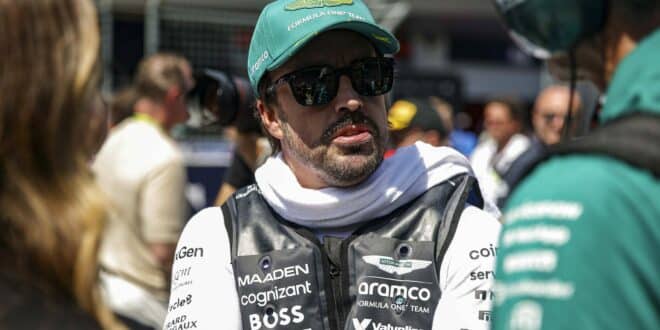
Fernando Alonso Diaz is one of the greatest. In his mid-forties he is still driving for Aston Martin.
In 22 seasons, he has been crowned World Champion twice and won 32 Grands Prix. He’s sprayed champagne 106 different times while standing on the podium.
What’s less well known is his stellar career as an endurance driver – he has won the Le Mans 24 Hours twice, the only person ever to be both F1 and Endurance World Champion.
And yet Alonso can’t quite escape the ‘what might have been’ tag. In 2005, Alonso was the youngest Formula One champion ever at 24 years old. When he repeated as champion the following year, the Spanish media went crazy. He was Christopher Columbus, Don Quixote and both combined.
He never won another championship. In 2007, he moved to McLaren and lost out by one point to Kimi Raikkonen.
After a couple of lean years he signed for Ferrari in 2010, and was again runner-up – this time to Sebastian Vettel. In 2012 and 2013, the same thing occurred. The rest of his Formula One career was a slow decline.
It is a well-known fact that the press builds up heroes only to bring them down.
Alonso is a true champion with real achievements, but the Spanish media paint him as the ‘Nearly Man’ – the driver who never quite fulfilled his early promise. He has gained a bad reputation as an angry competitor with a short temper.
Watch him with other drivers. Spain loves motorsport, and it is not uncommon to see a group of F1 stars talking together in long format interviews. The younger men clearly revere Alonso – and he comes across as happy, funny, razor-sharp and utterly charming.
So the question arises – why is sport so central to our lives? They are not all geniuses, except for Muhammad Ali. And they are often not well-educated (just look at the British footballers who are interviewed!).
When Real Madrid scores, 40 men in the bar will let out a Vesuvian-like roar, which can be heard by your cat.
Why does it matter to you?
I worked in Fuengirola for an English company. The warehouse boys had a miserable life. We office types were spoiled, but they had it good. Their job was tedious, and they worked under a metal roof – in summer the heat was unbearable, and in winter the noise of rain hammering down was deafening.
One day I went for a beer with one of them – let’s call him Peter. Peter was a Liverpool fan. He was able to recite statistics, provide potted biographies about players, both past and present, as well as offer detailed analysis of upcoming matches.
I learned a lot. Peter’s Liverpool games were the only thing that made his life worthwhile. “We should beat Chelsea at ours – we drew away in November,” he said.
So next time the roar from the bar across the way interrupts your John Grisham novel, think of Peter – and, like me, you might look on their boorishness with a slightly kinder eye.
Click here to read the latest Spain News at The Olive Press.