Costa News Spain Breaking News | English News in Spain.

The new rules could impact your daily driving in Spain. They will come into effect on 1 October 2026. The changes will make the streets of cities safer, especially for pedestrians and bicyclists. However, they also bring new responsibilities to drivers and professionals.
Many longstanding rules, such as the use of traffic lights and seat belts for cyclists are being updated. Although many of the changes aim to improve safety, rather than introduce tougher penalties for violating the rules, failure to comply with the new regulations can still result in fines.
What’s new and why is it important?
Spain updates traffic laws to make city roads safer
The Spanish government approved a reform to the General Traffic Regulations (Reglamento General de Circulación), introducing a new section dedicated entirely to driving in urban areas.
In the last decade cities have undergone a radical change. More bicycles, scooters with electric motors and pedestrians now share the same streets. The new rules aim to reduce conflict between road users, and make it clearer who has priority at intersections and crossings.
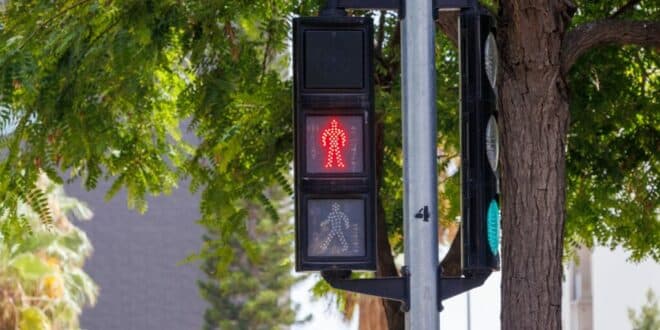
One of the largest changes is traffic lights at pedestrian crosswalks.
On 1 October, the flashing amber light for vehicles at a crossing will no longer be permitted to run at the exact same time as the pedestrian green signal.
The previous arrangement, while legal in some situations, was often confusing. Drivers may interpret flashing amber lights as a warning to proceed with caution while pedestrians assume they have priority due to their green signal.
This new rule eliminates the overlap completely, making it easier for everyone to understand crossings.
The change will make it easier for pedestrians to cross the road. It means that drivers will have to pay closer attention to traffic light sequences updated in cities and towns across Spain.
New responsibilities for drivers around cyclists
New regulations provide better protection to cyclists.
New rules require cyclists to ride in the middle of their lane when appropriate rather than stay close to the curb as they do currently.
Now, this position must be respected by motorists.
Drivers must also maintain a minimum of five metres between themselves and a cyclist traveling ahead in the same lanes. The aim of the measure is to discourage motorists from following cyclists too close, especially on busy city streets where cyclists might need more room to avoid potholes, parked cars or open vehicle doors.
A new change may surprise some drivers.
On urban single lane roads with speed limit of 30km/hr or less, councils may allow cyclists travel in both directions. This includes streets that are normally operated as one-way systems.
The signs will only be in place where they are needed, so it is important that drivers pay attention to any new signage installed by their local authorities.
The reform is part of a larger effort to promote cycling and make interactions between motorists and cyclists more predictable.
Professional drivers now required to wear seat belts
Professional drivers working in cities and towns will also be affected by this change.
Certain professional drivers have been exempted from wearing seat belts while driving in cities under certain circumstances.
This exemption will be largely gone by the 1st October 2026.
Professional drivers must wear their seatbelts in the exact same way that other motorists do. A few exceptions remain. These include cases where medical evidence is provided and certain parking and reversing manoeuvres.
The government believes this change reflects modern vehicle standards and removes a exception that does no longer align with current policy on road safety.
Some of the new requirements will only apply in 2027
The main reforms will take effect 1 October 2026 but not all measures.
The government has given manufacturers, retailers, and public authorities extra time to prepare two more changes.
Personal mobility vehicles and electric scooters will have to be equipped with lighting by 1 October 2027.
A stricter helmet rule for mopeds will also be implemented on the same day. The current requirement that helmets be certified is replaced by a requirement to wear helmets approved.
The timetable allows manufacturers and users to adjust before the new technical standards become mandatory.
These changes are important for anyone who lives or drives in Spain. Updated regulations aim to make city roads safer and more clear for everyone, regardless of whether you drive daily, cycle to your job or just cross busy streets at night. By familiarising yourself now with the updated rules, you can avoid confusion and fines when they are implemented in October.