Costa News Spain Breaking News | English News in Spain.

Water supply for Granada Province is guaranteed at least two years
Rebeca Alcántara
Granada
Friday, 27th March 2026 at 14:54Updated at 15:12h.
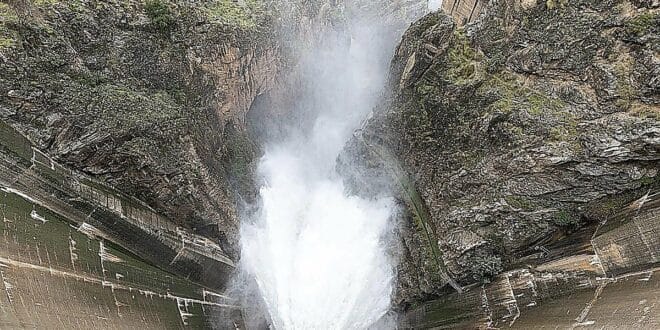
Heavy rains in the province of Granada during the first week in February left unusual images. Storms caused many negative effects. The storms had many negative consequences.
Those who were affected are now claiming the assistance they are entitled to in order to move forward, and the authorities work to repair the damaged infrastructure. There is also a positive aspect to the heavy rains: they are ending the drought, and guaranteeing water supply for two or even three years in many places.
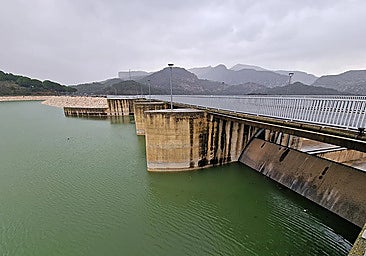
The reservoirs in the province are operating at about 65 percent of their capacity. This is almost twice the level from a year earlier. Data shows that there will be no water shortages in the next few months.
Related Article
Malaga waters: committee will declare the end of drought in provincial countryside after a five-year crisis
The drought reports by the Guadalquivir Hydrographic Confederation CHG, which covers the majority of the province clearly demonstrate the development that has occurred. Comparing the situation of 30 January to 28 February is a clear indication of the changes.
What does this mean for the basin? This means that three years supply is assured. But despite this, the CHG still hasn’t reached the green status that signifies that everything is in order. It is what the Confederation refers to as “pre alert”, which, although it may sound alarming, is actually not too serious.
They are Vega Alta Media, and Hoya de Guadix. CHG explains this second designation (the best being the first) means the service will be guaranteed for at minimum two years. The CHG also asserts that melting snow from the Sierra Nevada area will bring back the water levels to normal. Only Hoya de Guadix remained yellow. It is still much better now than it was at previous times, even though this area has suffered from droughts in the past.
Three years is the predicted guarantee when the snow on the Sierra Nevada melts.
What are the actual effects of this increase in water resources? The farmers will be the first to benefit. In the Vega de Granada, they had to ban the second crop last year because of the water shortage. The water that could be used to irrigate was low. The CHG says that, in the meantime, and pending the first CHG meeting (which is expected to take place in April), all indications are that there won’t be any restrictions on the countryside.
A year ago, drought alerts were commonplace. The entire confederation had been placed on pre-alert, and La Hoya was the driest part of the province. There were not enough resources available to meet the demand.
What’s happening in the Guadalquivir Basin is also repeated in the Mediterranean Basins, which includes other areas in Granada like the Alpujarra Valley and Coast. A couple of weeks back, the drought commission there also declared a normal situation. It seems like in 2026, the lack of drinking water won’t be an issue.
La Hoya de Guadix is the driest part of the basin.
The situation in the Hoya de Guadix is pre-alert, despite the rains. This warning will be lifted in the Vega Alta, but not for this other area. Last year, La Hoya had an emergency at this time. What’s happening? The Atlas of Desertification of Spain, prepared by the Spanish National Research Centre CSIC, the University of Alicante and with the support of Biodiversity Foundation of Ministry of Ecological Transition shows that it is a very arid place. There is less rainfall. It creates an amazing landscape but also drier weather than other parts of the province. The data from the historical series shows that the water shortage situation was much better in March 2019, the first year the records were available.