Costa News Spain Breaking News | English News in Spain.

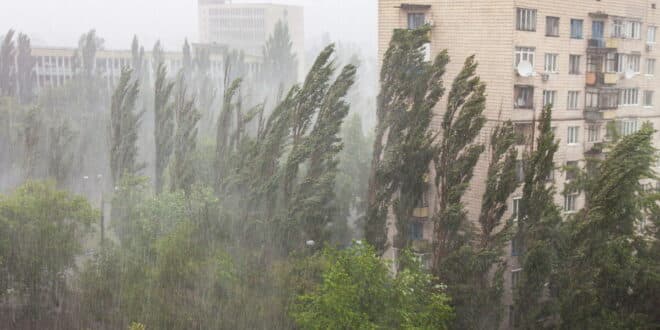
Storm Therese now affects multiple regions in mainland Spain with its rain.
Credit: Shutterstock/Vadym Zaitsev
As Storm Therese approaches mainland Spain on Friday, 20th March, regional authorities have suspended classes and closed roads of high risk across the Canary Islands. In mountainous terrain where rainfall has reached record levels, emergency protocols have now been implemented to prevent floods in barrancos or coastal zones that are vulnerable. The storm is now moving towards Madrid, Castilla La Mancha and the Mediterranean where AEMET issued new alerts due to intensifying rain.
The immediate result for residents and expats is the suspension of daily services. In addition, the government has mandated that they limit unnecessary travel until it begins to weaken.
Today, rain is falling in Spain
Rainfall is linked to Storm Therese is no longer isolated. It is instead forming a wide band of precipitation that moves inland.
As the system moves inland, cloud cover will increase in western Spain. Forecasts by AEMET indicate that conditions in parts of Extremadura are becoming unstable, as clouds and showers increase throughout the day.
Rain is spreading eastwards, and will soon reach central Spain. This includes areas such as Madrid and Castilla La Mancha. The skies are becoming overcast, and the intermittent rain is expected to increase later.
The Mediterranean Coast and the Balearic Islands are currently experiencing more scattered and lighter showers, but conditions will become more unsettling as the system moves east.
Instead of remaining localised, the storm has now developed into a larger rain pattern that affects several regions at once, with intensity varying according to terrain and location.
Canary Islands & mainland Spain: Prevention and Monitoring
The Most Advanced prevention measures On the Canary Islands, there are current measures in place to prevent flooding. In some areas, rainfall has been extremely high, increasing the risks of flooding. This is especially true in mountainous terrains and along barrancos.
Regional authorities have responded to this by activating emergency protocol, suspending classes and closing roads at high risk, as well as restricting access in areas exposed. In some coastal and low lying zones that are vulnerable, temporary barriers, sand walls, and other measures have been implemented to control the flow of water and reduce surface flooding. This is especially true when heavy rains coincide with rough sea conditions.
On the mainland, the focus is more on early preparation and monitoring than on active intervention. AEMET’s meteorological alerts guide regional responses. Local authorities monitor rainfall levels, conditions of rivers and drainage capacities as the system moves inland.
In certain areas, services are preparing to deal with a potential escalation. They review emergency protocols and monitor flood-prone zones. They also advise residents to avoid unnecessary travel. Although large-scale measures such as those in the Canary Islands are not widely used, authorities remain alert because rainfall continues to spread across the country.
When will Storm Therese reach Spain?
Today marks the moment when the storm is more widespread. The rain has spread beyond isolated areas, and now it affects multiple regions. The short-term forecast is for conditions to remain unsettling, but intensity will vary greatly depending on the location.
The storm is expected to weaken and move away on Sunday (March 22, 2019). Meteorologists warn, however, that heavy rains could continue even after the main system has faded.
Another commonly asked question is: Is the storm affecting Spain as a whole?
There are some areas that have less rainfall, but the situation is not uniform.
What it means to residents and expats of Spain now
Storm Therese, which is now a national weather system and not a localised event, will cause conditions to vary from region to region. The rain may arrive in areas that were dry at the start of the day, especially as the front travels from the southwest into central and east Spain.
Forecasts indicate that the worst conditions will persist today before easing off gradually on Sunday, as the system begins to weaken and move away from Spain.