Costa News Spain Breaking News | English News in Spain.

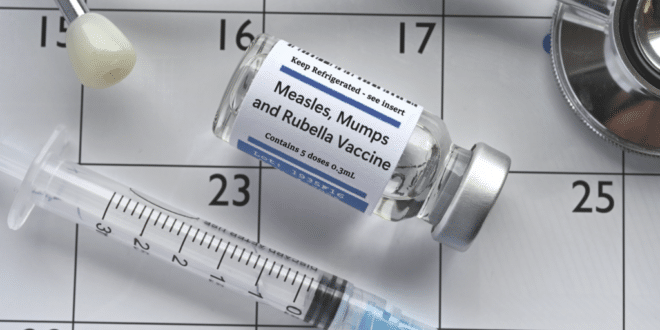
Some countries require childhood vaccination. Credit: MargJohnsonVA / Shutterstock
Current news cycles seem to be breaking records. It’s hard to keep up, and when the public debate is heated, other important issues can be pushed aside. Two of these “minor” news stories caught my eye, and I can’t help but wonder if we are at risk of overlooking the obvious.
Recent media reports on sepsis may have caught your attention. A UK ambulance trust has fitted all its vehicles in their fleet with sepsis packs so that they can administer antibiotics quickly to suspected patients. You are not alone if this news makes you uneasy. This issue is also being surrounded by a great deal of rhetoric and even hysteria. Please allow me to explain.
Understanding Sepsis – Challenges in diagnosis, treatment
Sepsis is a term that’s often used. The word sounds like “septic” and is therefore often used to describe situations that involve infection. Sepsis, in medical terms, is a condition that can be life-threatening. It’s caused by a dysregulated response of the host to infection. It means that your immune system reacts too much and damages vital organs. The condition is grave and can be deadly, but it’s not as common as many people think.
Media reports have reported on several tragic incidents of people who visited emergency departments and waited in line for hours before being told to go home with simple remedies such as paracetamol. In a second instance, the patient was told that they had likely contracted influenza. A young child was also suspected of having food poisoning. In all three cases, the patient’s condition deteriorated and treatment to save their lives was given too late.
There may not be a pattern at first. While sepsis undoubtedly is a medical emergency It is not always easy to diagnose. Early diagnosis of the disease is essential, although initial symptoms may be similar to common illnesses, such as food poisoning or influenza.
In emergency departments, clinicians typically follow a process known as differential diagnosis – a complex and methodical approach designed to rule out possible conditions before arriving at a definitive conclusion. While artificial intelligence can streamline certain aspects of the process, clinicians still need to ask detailed questions, perform examinations, monitor vitals and run tests. Sepsis evolves with time, which is a problem. The tests only provide a snapshot of the patient’s health at that moment. Patients may be discharged from emergency departments if there is no obvious abnormality at the time.
Medical observation is a close, trained monitoring of the patient, which includes constant tracking of oxygen saturation, blood pressure and heart rate. The clinical assessment can be altered if subtle changes are detected. Admission of a patient, who doesn’t appear to be in a critical condition, is often a tough decision, especially when beds are scarce.
Ambulance based interventions
The Isle of Wight initiative has seen ambulance crews equipped with intravenous drugs and given additional training in administering them when sepsis was suspected. This development is concerning because no one should die of untreated sepsis. It may be that the pressure is systemic to get patients through emergency rooms quickly. If an ambulance team diagnoses sepsis at home and starts IV antibiotics, it means that the condition has already advanced significantly (and been clinically diagnosed). Sepsis is a serious condition that can be fatal if not treated quickly.
When the body mounts a severe response to an infection, sepsis can occur. It can affect anyone but is more common in people with chronic illnesses, those who have compromised immune systems, elderly, frail and newborn infants. Although it can affect anyone, healthy adults and young people are more likely to be affected.
The media can give the impression of a dramatic increase in sepsis and a need for widespread alarm. Sepsis has been included more explicitly in differential diagnoses, thanks to changes made by the NHS. Sepsis is not a national epidemic. When cases are identified and treated quickly and appropriately, they can be effectively treated with the right observation. Panic is not helpful or justified.
Measles – a preventable threat
However, there is another matter that deserves serious concern.
You may have grown up watching Valerie Singleton. Blue Peter You may have had measles as a child if you watched BBC’s Children’s Service. Many of us did – along with a range of other infectious diseases that were once considered routine. I recall being told not to scratch and to read special “sick” books. I survived the measles as did most children, but was not aware that some children died and others suffered lasting effects such as deafness.
The measles virus is extremely contagious. You can contract measles by entering a room that has been occupied by a person who had the disease. In 2016, the UK was officially declared free of endemic measles transmission, largely due to widespread uptake of the MMR vaccine – a vaccine that was not available when I was a child.
A significant outbreak of measles is currently occurring in north London. Modelling indicates that the disease may spread throughout the capital, putting the UK at greater risk.
Controlling infectious disease
COVID-19 showed that infectious diseases are controlled in two ways: either by limiting the contact of individuals through isolation, or by immunising high numbers to ensure that transmission chains can’t be maintained. Scientists agree that a vaccination coverage of approximately 95% is needed to stop measles spread.
Some parents decide not to vaccinate, citing safety concerns. Some parents believe that the MMR vaccine is not worth the risk. Vaccination does carry some risks, but they are minimal. In a now-discredited research, a link was once made between the MMR vaccination and autism. This paper was thoroughly debunked and formally retracted. It has also been contradicted by subsequent research. Yet, its influence continues. In countries where vaccines are not compulsory, vaccination rates have declined and disease outbreaks that were previously under control have returned.
Measles is a clear public health danger, unlike sepsis. Unlike sepsis, we possess the means to halt measles transmission effectively – yet we hesitate to act decisively.
Balancing Public Health and Individual Liberty
Public health policy has always been a tension between individual freedom and collective well-being. The COVID-19 epidemic illustrated this very clearly. While policymakers claimed they were guided only by scientific advice, a historical analysis indicates that political considerations delayed decisive actions. Although it is rare to find a majority of people who support a policy that promotes the interests of their population, failure to act can have dire consequences.
Some countries mandate childhood vaccinations, some as a requirement for school attendance. Others rely more on recommendations than legal mandates. In the United States vaccination requirements are set at the state-level. Recent US discussions by the president about re-examining MMR vaccine risks reinforcing the anti-vaccination narratives.
I’ve always believed that all concerns should heard and treated with respect. It’s true that vaccines carry very little risk, just like any other medical intervention. It is also true for most medications. Risks are rare.
We accept the small but real danger of a traffic accident every time we drive to a supermarket. They are tragic and unavoidable. I’ve seen them and I’ve been there. You’ve probably seen a horrible crash yourself. Despite this, we continue driving as we are aware that the risk is very low. The same principle is true for vaccination: while the risk may not be zero, it’s extremely low, especially compared to other infectious diseases.
We appear complacent when it comes to the resurgence in serious childhood diseases. The real challenge is not to create alarm but rather to make balanced, evidence-based decisions that protect public health.
This column contains information for educational purposes and is not intended to be medical advice. It does not replace professional medical advice, diagnosis or treatment. If you have any questions about a medical condition, always seek out the advice of a qualified physician.
Dr Marcus Stephan