Costa News Spain Breaking News | English News in Spain.

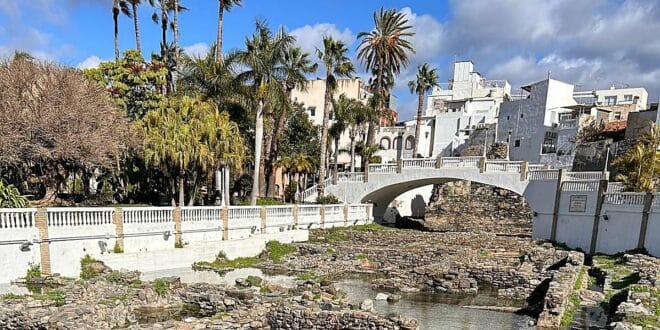
Almuñécar town hall seeks to reassure residents over rise in water levels in Roman remains
The Ideal Way to Buy
Friday, February 20, 2026, 13 :51
The councillor for culture and heritage at Almuñécar town hall Alberto Manuel García Gilabert, has issued a statement to reassure residents of the Costa Tropical town in Granada province that the accumulation of water in the town’s Roman remains is perfectly normal following the recent heavy rains.
Gilabert said that the increase in water level at the Roman baths, aqueduct and salting factory was “completely natural and normal after so much rain in just a few short days”. Gilabert explained that this is natural water which is continually renewed. “Even if you removed it, it will flow again as it comes from subsoil. This is not a problem of structure, but rather a behavior of the land.
He said that, during the rains, the ground was soaked. The water table had also risen above the surface. Both the Majuelo region and the area surrounding the La Carrera Aqueduct have become a sort of natural spring.
Elena Navas of the municipal archaeology department recalled that this phenomenon was not the same in Roman times, when the aquifer drains directly into the ocean. “When these infrastructures where built, both Majuelo aqueduct and Majuelo were at the surface. Over the centuries, the river has deposited sediment until it has covered the basin of the Río Seco and the archaeological remains themselves, so that today the site is several metres below the current ground level,” she explained.
The rain-resistant design is a must for any outdoor activity
Presently, surface water is circulated above the area that is also surrounded with walls, producing what can be technically understood as a big natural pool. The archaeologist noted that although the water level was high, it will decrease gradually as the land drains.
The water can appear greenish because it contains microorganisms such as spores or seeds, which when heated to the correct temperature, will produce a film.
Navas said that “although it looks like a pond from the surface, it’s actually clean water which is constantly renewed at the bottom”. It does not remain stagnant but keeps flowing slowly.
Navas said that although the remains had been affected by water contact, it would not be possible for a definitive evaluation to be made until the site has been completely drained.
She noted that “Roman buildings are designed to endure these conditions.” The basins have been designed specifically to contain liquids. They are lined with an opus signinum mortar, a waterproof hydro-hydraulic mortar that is prepared for contact with water. This guarantees their resistance.
García Gilabert has said that the municipal cleaning services will reinforce the tasks of removing paper and waste that may fall inside the site, acting within the technical and safety possibilities allowed by the current situation.