Costa News Spain Breaking News | English News in Spain.

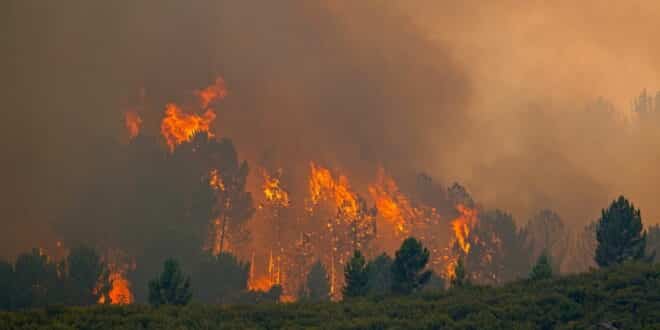
The EU is preparing its 300-strong rapid response force to deal with the intensifying wildfires in Europe.
Shutterstock: Nuria PhotoStock
On Thursday, February 6, 2026, the European Commission in Nicosia announced the formation of a 300 strong EU rapid-reaction firefighting team. Wopke H. Hoekstra, EU Climate commissioner, announced the initiative after a meeting of environment and civil protection officials. The decision is made after the wildfires of 2025 which the EU has officially described as the most severe since data gathering began in 2006. Over one million hectares were burnt across the EU.
Brussels explains the move by citing the escalating fire risks caused by climate change and the need to take faster, more coordinated emergency cross-border action when national services become overwhelmed.
How the 300-strong new force will operate in practice
The new unit will be operating within the framework EU Civil Protection Mechanism (UCPM) The Emergency Response Coordination Centre in Brussels will coordinate the response. When a Member state requests assistance, ERCC organises logistics and co-finances the deployment costs. The 300 firefighters were designed to provide a rapid response capacity capable of being mobilised within hours during large-scale emergencies.
How does this fit with existing EU wildfire capacities?
The announcement builds on existing structures. Since 2022, EU pre-positions firefighters in Southern countries at high risk During the summer months. Under this scheme, 671 firefighters were deployed from 14 Member States in France, Greece Portugal Spain Italy and 2025.
Last year, 18 firefighting airplanes and 4 helicopters were made available to assist in emergency missions by the EU. In 2024, the Commission also approved €600 million in funding to purchase 12 new firefighting aircraft, which will gradually enter service over the coming years.
Climate conditions shaping EU policy
Official EU assessments based upon Copernicus data show that wildfire risk In Europe, heatwaves are increasing in frequency and intensity. The 2025 season saw extreme weather conditions. Between 8 and 19 august, more than 500,000 acres of land burned in Portugal and Spain. The Commission has repeatedly warned climate change could make these events more common. This reinforces the argument for stronger collective preparation.
Cyprus as the hub of a wider EU wildfire campaign
In addition to the new force, The Commission has also committed to create a European Firefighting Hub in Cyprus. This hub will be used to improve regional training, coordination and rapid deployments in the eastern Mediterranean. The EU’s broader strategy relies also on early warning, monitoring and training through the European Forest Fire Information System.
The effectiveness of the EU rapid response firefighting forces will depend on the speed at which they are operationalized and integrated with the existing national and EU response system.