Costa News Spain Breaking News | English News in Spain.

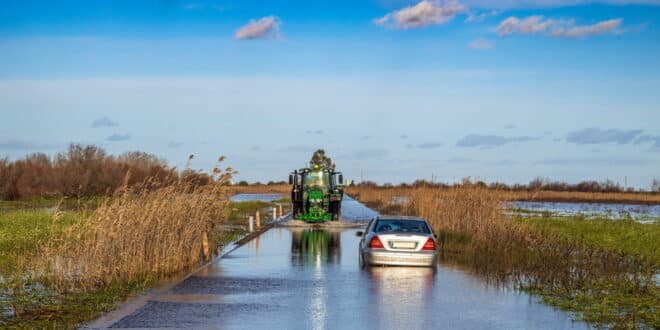
Floodwaters from storm Marta surround a vehicle and tractor in rural Andalusia. The damage done to farmland, infrastructure, and other assets is staggering.
Shutterstock: Right Perspective Images
In the last week, farmers in Spain’s south and west have reported “catastrophic damage” to their crops after a storm. Storm Marta brings torrential rainfallAndalusia was the worst-hit area, with gale force winds and widespread floods. The storm was named by the National Meteorological Service in early February. It arrived as part a succession Atlantic systems which left soils soaked, rivers swollen and farmland more vulnerable.
Agricultural organizations say that the timing was particularly bad, as it hit orchards during the critical season, greenhouse production, winter vegetables and greenhouse production. Andalusia’s regional agriculture authority has estimated that around 20% of the region’s agricultural production may be affected. However, farming unions have warned that the final losses could be much higher due to limited access to many fields.
How and where Storm Marta caused most damage
The most severe impacts have been concentrated in Andalusia, especially in Cádiz, Seville, Córdoba, Huelva, Almería, and Málaga. In low lying river basins, sustained flooding has submerged pastureland and citrus groves. This increases the risk of disease, root stress and fruit drop. In Almería, strong winds ripped through plastic-covered greenhouses, tearing structures and destroying high-value vegetable crops Controlled growing conditions are essential for controlled harvesting. Damage to farm access roads and rural tracks has also caused harvest delays and emergency repairs.
Why has the damage been so severe?
Storm Marta wasn’t the only storm that hit. The soil had been saturated by a series of storms over the past few weeks, making it less able to absorb additional rainfall. In the end, most of Marta’s precipitation was surface runoff which exacerbated floods in farmland. Some reservoir releases in certain areas increased water levels downstream, which added pressure to already inundated farmland.
What it means for farmers, supply chains and the agricultural industry
Farmers’ immediate priorities include: documenting lossesStabilising infrastructure damaged and assessing if affected crops can still be salvaged. Spain’s insurance system for agricultural damage is already in action to process claims. Formal assessments, however, may take up to a week if the access remains restricted. Citrus, greenhouse vegetables and berries will be affected in the short-term, which could have knock-on effects on domestic markets and exports.
Damage control plans
Regional authorities have begun to move towards the formal declaration of a natural disaster, which will unlock emergency aid for farmers. Forecasters warn, however, that the weather could remain unsettled in the days to come, limiting time for fields draining. Storm Marta’s full economic impact will be clear only after water levels have receded and harvest losses are accurately measured.