Costa News Spain Breaking News | English News in Spain.

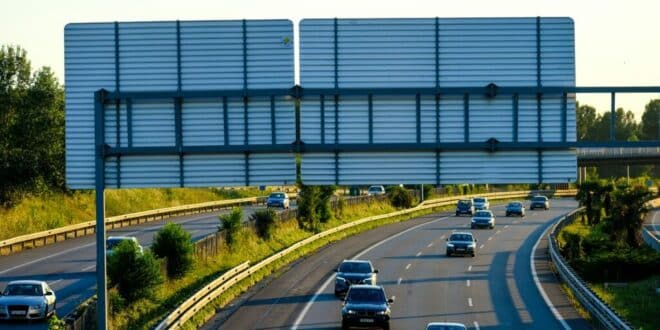
Catalonia improves speed monitoring along the 344km AP-7 by installing new mobile radar units.
Credit : csp, Shutterstock
It is useful to know if the AP-7 is used regularly.
From this week, the entire 344 kilometres of the AP-7 in Catalonia – from La Jonquera to Ulldecona – are now under mobile speed surveillance. Not only the usual accident hotspots. Not just some sensitive stretches. The entire motorway.
Six more mobile speed cameras were added to the existing four, making the total ten. According to the Catalan Government, the goal is to reduce accidents, and maintain speed control along the entire length of one Spain’s most busy roads.
The announcement was made by Interior Minister Núria Parlon in Parliament, in the middle of broader discussions about mobility problems in Catalonia. But for drivers, the key takeaway is simple – enforcement has just stepped up a gear.
No “safe” stretches anymore: the entire AP-7 will be watched
Until recently, the AP-7’s speed control system tended to be focused on certain sections. The approach has changed.
Authorities have decided that they will not be implementing controls “by stretch”, rather, across the entire length of motorway. All 344 km between the French border to the south of Tarragona will be monitored by the same plan.
The change comes after four mobile radars were tested for a year. According to the Catalan Traffic Service, these four devices have monitored 11 million vehicles in 2025 and issued 585,000 tickets.
What is striking is the rapid change in driver behaviour. Around 5% were caught speeding within the first two days of installing a radar. In a few weeks, this figure fell to around 2%.
Many drivers eased their accelerator pedals when they realized the cameras were in place.
Radars are not hidden traps. Authorities have said that the radars will be clearly marked everywhere they operate. The intention, they insist, is not to catch people out – but to make sure limits are respected.
Be aware that the speed limit varies along the AP-7. Despite the fact that most of the motorway is 120 km/h in places, there are sections where it’s lower. Between El Papiol and Parets del Vallès, for example, the limit is currently 100 km/h. The speed is enforced if a mobile unit has been placed.
Each week, in coordination with the Mossos d’Esquadra, officials will decide where to position the mobile radar cabins – often moving them every month or two.
Trucks are also being scrutinized
The focus is not only on speed.
Since tolls were removed, traffic on the AP-7 has surged – especially heavy goods vehicles. When lorries are involved in serious accidents, traffic jams can last for miles.
Along with the use of mobile radars, authorities have increased their checks on cargo transport.
Large-scale inspections — often carried out in former toll areas like Martorell or La Roca – will be stepped up. Officers can safely stop trucks to check that drivers adhere to the legal rest periods.
Fatigue was linked to several incidents where trucks left the road. Officials claim that stricter monitoring of drivers’ driving hours will help to reduce accident rates.
Why now?
The AP-7 motorway is not just any ordinary road. It is one of Spain’s major arteries that runs along the Mediterranean corridor, linking France to southern Spain.
Since the end of tolls, more drivers have chosen it – commuters, holidaymakers, and transport companies alike. The increase in traffic is causing more congestion which, in turn, increases the risk.
The Catalan Government has chosen to cover a wider area, rather than focusing on a few dangerous zones. The goal is to have a deterrent effect that runs the length of the route.
For drivers, that means one thing: if you’re travelling on the AP-7, assume speed limits are being checked – wherever you are.
It remains to be determined whether the increased surveillance will reduce accidents significantly in 2026. It is safe to say that the days when you thought “there won’t be a camera here” are over.
It’s time to check your speedometer if you regularly use the AP-7.