Costa News Spain Breaking News | English News in Spain.

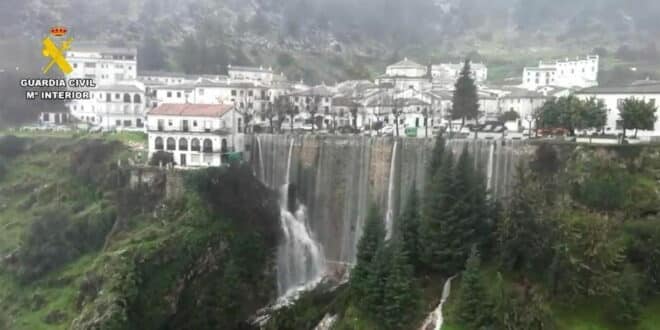
Spain’s start of 2026 is a torrential deluge with an endless “train” of storms. The Atlantic storm systems continue to batter the Iberian Peninsula. These named storms, from Ingrid to Nils (the impending one), have caused record rainfall, flooding and infrastructure damage, leaving residents wondering when the skies are finally clearing. But why now?
The name of the storm is a threat
The barrage of this season began with Alice, in September 2025. It then escalated through Benjamin, Claudia and finally, Marta, in early February 2026. Spanish Meteorological Agency, part of Southwest European Group (AEMET), names these storms alphabetically and alternately by gender for clarity. Ingrid and Joseph have already been here, as well as Kristin, Leonardo and Marta. Nils will be next if the conditions remain unchanged, followed by Oriana and Pedro.
It’s not just for show; naming raises awareness of risks and increases the public’s perception. Only severe storms get names, such as orange or a red alert for wind speeds over 90 to110 km/hr or for heavy rains and flooding. In provinces like Leon and Malaga, saturated mountain soils and swollen rivers such as the Bernesga, Torío and Guadalhorce are under constant watch for increasing dangers and the need for red alerts.
Why is there so much rain? Atmospheric causes are revealed
What is the cause of your problem? A negative North Atlantic Oscillation (NAO) phase has weakened the Azores anticycloneNormally, it acts as a shield to divert storms towards the north. It is now lower this year and creating a “fasttrack” to allow storms from the Atlantic to speed towards Spain and Portugal. Meteorologist Isabel Moreno describes it as “Atlantic doors wide open.”
A river of intense humid air from the unusually warm Caribbean Sea has exacerbated this situation. Due to the warmer Caribbean seas, oceans absorb 90% of heat and have caused Caribbean waters to be 20-800 times hotter. A polar jetstream, which is influenced by stratospheric instabilities and vortex polar instability, also directs cold air southward.
This year, there are more Atlantic Storms than usual.
No. Just Spain and Portugal. A warmer ocean can cause more intense rain, and an Arctic that is warmer than normal could destabilise jet streams from the Gulf of Mexico into Europe, causing more storms. The rains this winter are unusual: in the first five days, Spain received triple the usual rainfall. Seven storms with high impact in one month filled reservoirs to 4,500 cubic metres. However, they also caused chaos and forced the evacuation of Grazalema in Cadiz.
Impacts and Outlook: When will it stop raining?
The season brings with it flooding, wind damage, maritime tempests, and other weather-related issues. Forecasts indicate continued instabilities into mid-February. Yet, there is no immediate relief on the horizon. As Spain tries to manage with this so-called “unprecedented” pattern, questions still remain: Will 2025-2026 break storm records? Yet, they have not been broken. It’s still too early to tell. In 1936, there was much more. Storm Nils is approaching, so it’s important to be vigilant.