Costa News Spain Breaking News | English News in Spain.

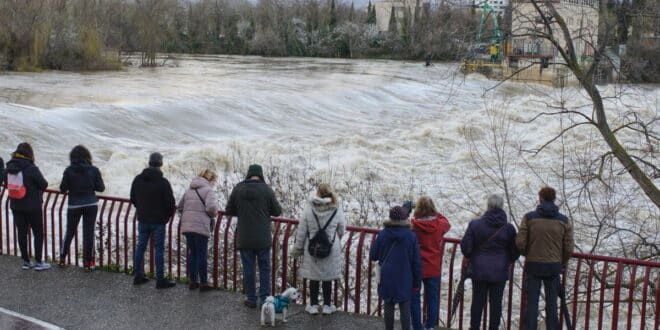
Authorities warned residents to stay away from riverbanks, obey emergency warnings and respect flood-prone zones. Photo credit: www.mariomartija.es/Shutterstock
Storm Marta continues to affect Spain, causing heavy rains and increasing river levels in multiple regions. The Guadalquivir river has surged in areas within Sevilla designated as flood risk zones, prompting the authorities to put the municipality on maximum alert.
Although the water level has not yet reached residential streets, it has flooded areas that are officially designated as “inundable”. The city council is now taking preventive measures and monitoring riverbanks. Cirque du Soleil’s performance was cancelled, as well as the Sevilla FC game, to minimize exposure to hazards. Meteorological services report that over 100 millimetres have fallen in the city in the last 24 hours. This has contributed to a rapid rise in the river level.
In sensitive areas, such as Cartuja and Triana where the river levels are most noticeable, emergency teams have been deployed. Officials warned that more rain could rapidly worsen the situation, and required constant vigilance. Residents were reminded of the fact that even areas considered to be safe can become vulnerable to flooding when the river rises at this rapid rate.
Police rescue a person who falls into the Guadalquivir
It became apparent how serious the situation was when National Police officers pulled out a man who had fallen in the Guadalquivir River and was being carried away by the current. The person, who was found near the riverbank showed signs of being disoriented.
Security personnel alerted authorities to the situation, and they acted immediately to save the person. Medical personnel treated the individual on site before transferring them to Hospital Virgen del Rocío. Authorities warn that this incident highlights the dangers associated with swollen riverbeds, even in areas which may seem calm. They urge residents to stay away from the riverbanks, and to follow safety instructions while alerts are in place. Emergency teams have stressed that even the shallowest sections of rivers can be dangerous, especially when currents increase quickly.
Palma del Río and Granada See Forceful Flowing Rivers
In Palma del Río, Córdoba, concerns remain high as the town sits at the confluence of the Guadalquivir and Genil rivers. Both rivers are rising, which puts low-lying land at risk. Local authorities have intensified their surveillance and are preparing contingency plans for a possible worsening of the situation. Residents were urged to stay vigilant and keep up with official updates.
Upstream, the Genil River in Granada has been carrying substantially increased volumes of water through the city, driven in part by controlled releases from the Canales and Quéntar reservoirs. Flow rates were between 60,000 litres and 100,000 litres a second, close to the historical maximum. Although officials claim that Granada is not in immediate danger of flood, the current strength and narrower sections on the river have prompted a heightened level of monitoring and increased warnings to residents along the banks. Authorities reported that this was one of the highest flows in recent years. This made the situation more difficult for local emergency services.
El agua llega casi a la zona del embarcadero junto al puente romano del río Genil en Granada capital. Se trata de una crecida histórica. #FMAGranada pic.twitter.com/1xCZMINAHS
— Granada GRX (@GranadaGRX) February 5, 2026
The Dams Swell Under Extreme Rainfall
Due to the heavy rains caused by Storm Marta, several dams in Spain have high water levels. Authorities have released controlled water from some dams to ease pressure on the structures. Reservoirs were closely monitored in order to prevent an uncontrolled overflow. While no failures have been reported, the increased water output adds further stress to rivers already near flood thresholds, particularly in Andalucía and Castilla-La Mancha. Authorities warned that the dams need to be carefully managed to ensure river safety while also preventing urban flooding. They also advised residents to stay alert, follow instructions from emergency services and remain vigilant.
Red Alerts for Rivers in Madrid
The North. the Community of Madrid has also been affected by the storm. The Confederación Hidrográfica del Tajo (CHT) issued red-level warnings along the Jarama, Alberche, and Henares rivers, signalling a high risk of overflow.
Monitoring stations at locations including Ciempozuelos, Mejorada–San Fernando de Henares, Algete, Alcalá de Henares, and Aldea del Fresno have reported elevated river levels. Authorities have urged residents to respect flood-prone zones and follow emergency guidelines. Local councils activated their emergency response plans, and sent out crews to monitor water levels in real-time. Officials stressed that even small increases in rainfall, or releases from reservoirs upstream could cause rapid changes. Constant monitoring is essential.
Authorities stress on ongoing risks
In all affected areas, officials stressed that early interventions had prevented widespread urban flooding. Conditions remain unstable due to the combination of wet ground, full receptacles, and continual rain. Even moderate rainfall can cause sudden increases in the river level.
Hydrological agencies continue monitoring rivers closely and providing updates to municipal officials and the public. Emergency services remain alert and prepared to respond as needed to rescue orders or evacuation orders. Authorities repeated the message to public safety: stay away from riverbanks and warning signs. Also, follow emergency team instructions. The storm continues to show the threat that extreme weather poses for communities in Spain, even if they are not directly affected.