Costa News Spain Breaking News | English News in Spain.

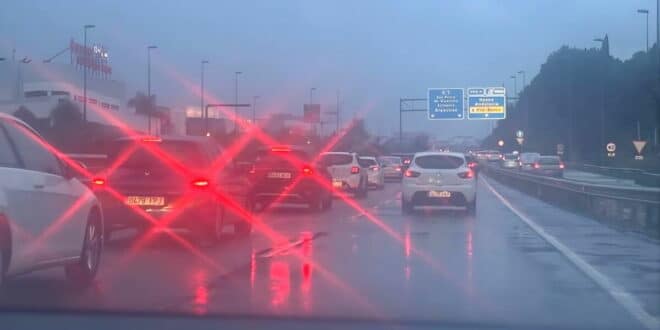
Do you want to know about any delays on the road ahead? What if there is a problem on the road, like flooding? This could cause your journey to be delayed. The Spanish Directorate General of Traffic has begun using the DGT3.0 system. This advanced connected vehicle platform manages real time traffic information on Spain’s entire network of roads. The brain centre gathers and distributes alerts via various sources including the V16 emergency beacons that are now mandatory. This gives drivers an idea of what to watch out for on the road, such as possible hazards, using variable message signs, apps and other systems. They don’t, but DGT3.1 could! – Only joking).
What alerts can DGT 3.0 manage?
DGT 3.0 Processes a variety of road conditions and incidents to keep drivers informed and prevent accidents. Alert categories include:
- RoadworksThere are lane closures and reduced lanes.
- Accidents Immobilised vehicles are detected by V16 beacons, which detect them automatically.
- Weather conditions that are adverse Heavy rain, snow, fog or ice are all examples of weather conditions.
- Traffic congestion, including dense traffic and full stoppages – great for those travelling on peak holidays.
- Temporary hazards Like objects on the roads, animals on the road running loose, spills or other obstacles.
- Access restrictions There are also specific rules and regulations for heavy vehicles, or detours that must be taken.
- Special Events affecting traffic, such as holiday travel operations (e.g., “Operación Salida” and return), major sports events, or festivals.
The alerts enable authorities to respond rapidly and inform other road-users in real time. Drivers don’t need to search for their phone while driving.
What is the DGT 3.0 traffic alert system?
The National Access Point makes DGT 3.0 alerts available to third-party applications, allowing them to display and integrate them. Google Maps, for example, can be enhanced with real-time alerts about what’s ahead.
According to Montserrat EstacaAccording to the Head of Programming for the DGT, popular navigation apps such as Google Maps and Waze are the primary delivery channels. These platforms can use data from DGT 3.0 directly to alert users about upcoming issues.
Warnings are also displayed on variable message signs along motorways, though they may not be visible to a driver negotiating with a truck a potentially dangerous overtaking maneuver. The way in which alerts are communicated to drivers will depend on the apps or systems that choose to use this information.
Is the V16 connected beacon able to alert other drivers directly?
No. The V16 connected beacon (mandatory from January 1, 2026 replacing the traditional warning triangles), does not transmit peer-topeer alerts directly to nearby vehicles. When activated, it sends the geolocation only to DGT traffic centres via DGT 3.0.
The data is verified with other sources (e.g. roadside cameras, patrols), and if confirmed by those sources, it’s shared publicly via variable message signs, navigation applications, and in-car system to warn approaching motorists. The beacon is not an emergency call system The V16 does not notify emergency services by itself (like eCall), and drivers still need to call 112 or their insurance company via their mobile phone. V16 transmits anonymized position data only. No personal information, vehicle details or other personal information is collected.
DGT 3.0 is designed to reduce secondary collisions through faster and more accurate warnings. Some drivers, however, have expressed their frustration over the requirement of a connected beacon, citing fears about its implementation and false alerts.
This could be a game changer for long-distance Spanish drivers. This could potentially save hours on a long journey: avoid long tailbacks and reduce speed before coming across a stray buck (yes, I have experienced this myself) as well as avoiding roadworks far away. Now it’s up to map-providers like Google and Waze whether they integrate the system.