Costa News Spain Breaking News | English News in Spain.


Photo Credit: Eugene_Photo/Shutterstock Photo Credit: Eugene_Photo/Shutterstock
Spain has experienced weeks of unusually persistent rain. Rivers are approaching critical levels, and soils have been saturated in vast swathes. Meteorologists are now focusing on a key atmospheric pattern over northern Europe that may hold the answer to when this run of unsettled weather could ease, and their forecasts point to mid‑February as a potential turning point.
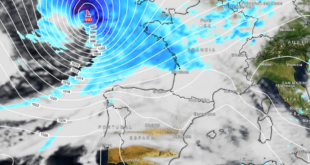
A large, stationary zone of high pressure has settled in the Norwegian Sea between Greenland & Scandinavia. This blocking patternAlso known as the The Norwegian Sea is surrounded by a “wall”. has been diverting Atlantic storm systems away from their more typical northern routes and steering them toward mid‑latitude Europe, including the Iberian Peninsula.
Unusual winter flooding and atmospheric blocking
In winter, the weather systems from the North Atlantic usually travel to northern Europe. This includes the United Kingdom, Scandinavia, and Iceland. The jetstream guides storm tracks northward along these paths. Southern Europe experiences a mixture of occasionally perturbed conditions and more stable ones.
The current configuration has disrupted this pattern. Instead of a zonal jet stream flowing from west to east across the Atlantic, a persistent high‑pressure block has anchored itself over the Norwegian Sea, forcing low‑pressure systems to dip farther south. This has caused a series of fronts to move across France and Spain, bringing moisture.
There have been some areas that have experienced extraordinary rain totals. For example, the weather station at Grazalema in Cádiz recorded 1,279 The monthly record for January was higher than December 2009! To put this in context, the average annual rainfall for some northern coastal cities is barely over 1,100 l/m².
This torrential rain has increased the risk of flooding, and decreased soil absorption.
When could the block possibly break? Meteorological Signals
Meteorological models A reconfiguration of atmospheric circulation is expected to begin around the 10th of February. Rather than a single event, this potential shift reflects a loosening of the high‑pressure block over the Norwegian Sea, allowing storm tracks to return closer to their familiar higher‑latitude routes and giving room for the subtropical high to expand southward and reinforce more stable conditions over southwestern Europe.
Models predict that the transition will begin around 10 February. However, the break in the blocking pattern and the spread of more stable conditions with a drier climate is expected to occur from around. The 15th of February and beyond
This is not a guarantee of summer‑like weather; rather, it would represent a return to a more typical winter configuration in which frontal systems predominantly track across northern Europe while southern areas experience drier spells and less frequent deep low‑pressure impacts.
What this would mean for the weather in Spain
If the block does weaken as models indicate, the frequency and persistence of rain events over much of Spain could diminish, especially across southern, eastern and Mediterranean regions, where precipitation could fall near or below typical averages for the time of year from mid‑ to late February.
The northwestern areas, such as Galicia, Cantabrian Coast and the Northern Plateau, may remain under Atlantic influence for longer. This could lead to more unrest, even though the block is weakening.
The model projections are not guarantees. The weather forecast for multiple weeks in advance is subject to inherent uncertainty, and the atmospheric conditions can change unexpectedly. Meteorologists warn the public that even though the general pattern may shift, there could still be sporadic fronts or unsettled periods during the transition.
Continued Vigilance is Advised
The Spanish authorities continue to issue warnings and advisories in areas where there is a high probability of hazardous weather. This includes the National Meteorological Agency. Even though a shift in the background is taking place, immediate forecasts continue to predict rain, strong wind and coastal conditions that are significant in many regions.
The anticipated mid‑February shift offers hope for a break in the country’s exceptionally wet pattern, but residents and officials are urged to follow regular updates from meteorological services as forecasts evolve and the full impact of the changing atmospheric setup becomes clearer.