Costa News Spain Breaking News | English News in Spain.

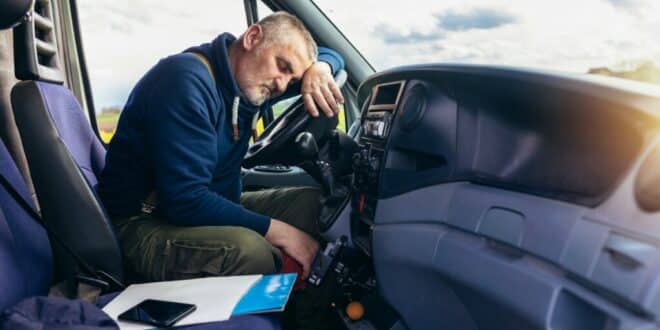
While the official focus of today’s Madrid meeting was on wider road safety issues, it brought into sharper focus a common problem for many readers: sleepiness during long journeys. Fatigue is a common problem for thousands of drivers who travel regularly between cities and along Spain’s highways.
Statistics on fatigue and road safety in Spain
The magnitude of the problem is enormous. Data from the Dirección General de Tráfico (DGT) The data consistently show that fatigue is a contributory factor to between 15 and 30% of all accidents on the road. Even if drivers don’t fall asleep completely, reduced concentration, slower reactions times and short “micro-sleeps”, can cause serious accidents.
The official figures indicate that drowsiness also plays a part in about 7 per cent fatal crashes in Spain. Especially on rural routes and high-speed roads where monotony is likely to lull motorists into a false security. The classic fatigue symptom, lane deviation, is one of the leading causes of fatal accidents in rural areas.
Safety measures for drivers
Experts in road safety continue to advise motorists to take breaks every two hours, or every 200 kms, when driving long distances. DGT warns motorists to avoid starting a long trip without enough sleep, driving during early morning and mid-afternoon peaks, or relying only on caffeine.
It is also important that drivers recognize the early signs of fatigue. These include frequent yawning and difficulty maintaining eyes open. They should also be aware of drifting over lane markings or an inability remembering how many kilometers they have driven. Stopping at the nearest service station to take a break is always safer in these situations than trying to “push on.”
How Guardia Civil enforces rest breaks
Following today’s discussions, the Agrupación de Tráfico de la Guardia Civil is expected to intensify its focus on driver alertness during existing road-safety campaigns. The Agrupacion De Trafico De La Guardia Civil is expected to intensify its focus on driver alertness during existing road-safety campaigns.
Officers will be expected to increase their visibility on major routes during rush hours and late night hours. Random roadside inspections may include short questions regarding recent rest stops and planned breaks for long-distance drivers.
Guardia Civil will also be more visible at motorway rest stops and service stations, encouraging drivers to stop rather than drive when overtired. Officers may tell drivers to stop driving if they are clearly exhausted.
What the Guardia Civil may require of drivers
Officers have the right to suggest or demand that a driver take a break if they feel too tired to drive safely. In extreme cases where the condition of a motorist is considered to be a risk to the driver or to others, the Guardia Civil has the authority to delay the journey until the driver is fit.
The focus remains on prevention, not punishment. The authorities are eager to present these measures as safety initiatives rather than a crackdown. They focus on reducing accidents instead of issuing fines.
In the coming weeks, there will be an increase in travel.
In the next weeks, fatigue risks are expected to increase due to increased travel during winter, Carnaval celebrations in February, and weekend traffic. The DGT’s and Guardia Civil’s Madrid meeting today shows that they are committed to keeping this issue on the top of their agenda.
Readers who dread driving long distances will find this message clear: plan ahead, get enough rest and be prepared for more visible road checks in Spain.