Costa News Spain Breaking News | English News in Spain.

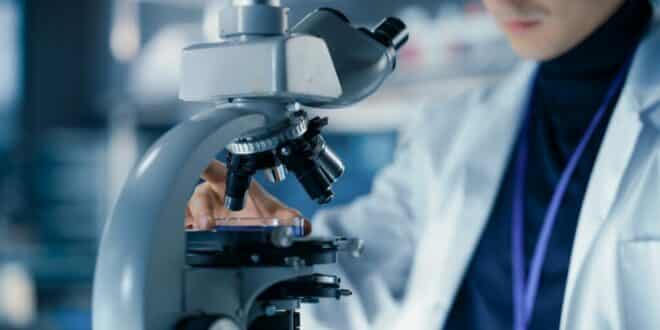
Stanford University’s research team has designed and synthesized a new virus. Credit: Gorodenkoff / Shutterstock
“Everyone’s talking about Greenland” sounds like the title of the latest West End hit – if only. Greenland appears to have been dominating the news in recent months, and this prompted to me to share some truly impressive science.
Stanford University’s multinational team of researchers has created and synthesized an easy virus. In practical terms, this means they have been able to “print” a virus engineered to perform a specific task – in this case, to interfere with a bacterium and stop it from reproducing. The virus, named Evo-Φ2147, was tested against E. coliThe bacterium is responsible for serious gastrointestinal disease. Researchers allowed bacteria to grow in a Petri plate rich in nutrients and introduced a few droplets of the engineered viruses. As the virus attacked the bacteria, patches of clear skin appeared almost immediately.
This new development is especially exciting, as while antibiotics are capable of achieving similar results, antibiotic resistance and unwanted side effects are increasing. The engineered viral operates differently. It targets a specific bacterium and enters into the host cell.
The work, although still at the laboratory level, represents an important step in the direction of targeted and personalized medicine. Stanford’s team combined artificial intelligence with advanced DNA construction technologies to create biological blueprints.
There is a downside. Adrian Woolfson has called this a “massive and consequential moment.” His caution is a reflection of the implications that come with being able influence life on such a fundamental basis.
Viruses do not qualify as living organisms. They do not meet biological criteria. In the COVID-19 epidemic, it was vital to make clear that a virus is genetic material contained in a shell of protein. A virus cannot be “killed” in the conventional sense. The ability to design a viral in this manner represents the first steps towards something truly transformational.
If we can target specific cells with this precision, it could revolutionise how we treat diseases such as cancer – an objective that the research team is undoubtedly pursuing in the long term. This breakthrough also shows what can be accomplished through global collaboration on a shared goal.
As I read about this research in the midst of headlines about the Arctic and other news, I came across some encouraging news that was closer to home. Three new drugs were approved for effective treatment of prostate carcinoma. That was really uplifting to me. Recent attention has been drawn to prostate cancer, in particular after the UK refused to introduce a national screening programme despite being backed by several prominent figures, including the former Prime Minister.
I’m still a little unsure about mass screening. It is the PSA test that is the problem. It accurately measures PSA, but it’s not a reliable indication of cancer. PSA levels that are elevated can be caused by a variety of benign causes. It is the only screening tool available at this time.
I would recommend that men older than 55 discuss PSA testing with their doctor. The test is painless and simple. If results are higher than expected – bearing in mind that “normal” ranges are broad – the test may be repeated after six or twelve months. MRI scanning may be recommended if levels are persistently high. This is a major improvement to the diagnostic pathway. MRI imaging provides valuable context to help specialists determine if a biopsy is required. MRI imaging is recommended as a preliminary step, since biopsies are associated with certain risks. Early detection of prostate cancer can lead to excellent treatment outcomes.
It is possible, in the future that engineered viruses will be used to directly target cancer cells. Although we aren’t there yet, the progress made is encouraging. For now, a discussion with your GP will be the best option.
While the attention of much of the globe was elsewhere, the crew of the International Space Station had their own dramatic experience. NASA activated the medical evacuation protocol for the first time ever, bringing the entire crew back to Earth urgently. The obvious question was: what could possibly have caused such a drastic response?
Astronauts are extensively trained to manage medical emergencies, from trauma and bleeding to decompression-related incidents. The station has a large supply of medical supplies. Ground-based specialists can be contacted at any time. Even a minor infection in a confined zero-gravity space could be dangerous. Some people of a certain age will remember the Apollo 13 Mission. The Apollo 13 mission is remembered by some of those of a certain age.
Preventing transmission of an illness from one crew member to another is very difficult. In these situations, a rapid escape may be the best option.
Once the decision was made, the crew returned to Earth in just over seven hours – a remarkable logistical achievement. The crew’s return to Earth in just over seven hours is an impressive logistical achievement. Dialing 112 in continental Europe will connect you with emergency services. In Spain 061 can also be used to report medical emergencies. Being able to get help at any time is reassuring.
And I imagine that, from orbit, Greenland must look truly amazing – beautiful, even.
Information provided in this column should only be used for informational and educational purposes. It does not constitute any medical advice. It does not replace professional medical advice, diagnosis or treatment. If you have any questions about a medical condition, always seek out the advice of a qualified physician.
Dr Marcus Stephan