Costa News Spain Breaking News | English News in Spain.

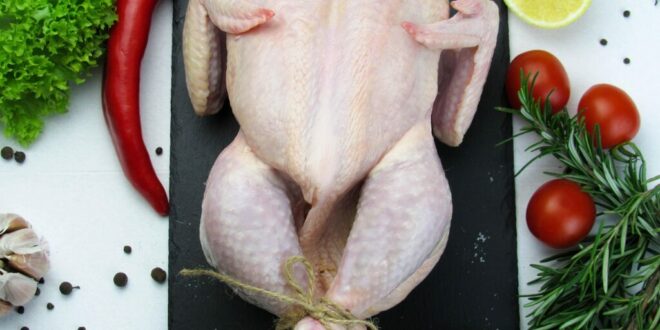
A Spanish butcher reignited an old food safety debate by warning customers to never wash raw chicken. He claimed that rinsing the meat under the tap was “dangerous”, and spread harmful bacteria throughout the kitchen.
The butcher online is called El As Carnicero“, he told his followers in a viral TikTok clip that washing poultry can contaminate sinks, utensils, and ready-to-eat food – and that thorough cooking, not rinsing, is what destroys bacteria such as salmonella.
Although the official advice is consistent across Europe and Britain (DO NOT wash raw poultry), consumer behaviours vary widely between countries. These are influenced by food culture and tradition as well as perceptions about hygiene.
UK: Clear guidance on washing raw poultry, mixed behavior
The UK’s Food Standards Agency (FSA) Warning: Rinsing raw chicken increases the risk for cross-contamination. The agency warns that washing raw chicken can spread salmonella and campylobacter via droplets on hands, surfaces, and food nearby. It recommends that cooks only rely on proper cooking for poultry safety.
The habit persists in spite of this. The FSA’s most recent Food and You 2, A survey in the UK shows that four out of ten adults still wash their raw chicken occasionally. Many wash the chicken because their parents, grandparents or other family members taught them that this was necessary. They also believe that washing it will remove any “dirt”.
The UK government has stressed repeatedly that washing poultry is not recommended. It is not clear how to get there. It may not reduce germs, but instead spread them. According to studies behind the “Don’t Wash Raw Chicken”, campaign, contaminated droplets can travel a considerable distance.
Spain and Southern Europe’s approach towards washing raw chicken
As the viral video of the butcher illustrated, in Spain, it is more common to wash chicken than in the UK. In the past, it was common to wash raw poultry in parts of southern Europe including Spain and Italy. Despite public awareness campaigns gradually changing attitudes, many households still adhere to inherited habits and wash poultry in order to improve cleanliness. Reyes Vilches, a member of the Spanish Academy of Nutrition and Dietetics says that “raw meat contains bacteria, which can cause food poisoning, and washing the meat can splash onto nearby objects and spread the bacteria.”
Northern Europe’s approach for washing raw chicken
Although the practice is not as prevalent in Northern Europe, it still exists. The practice has not gone away. Dutch survey by the Netherlands Nutrition Centre More than 25% of respondents wash raw chicken frequently or almost every time. The Centre emphasizes that washing is only a way to spread bacteria and that the chicken should be cooked completely instead.
EU-wide Research SafeConsume Many people in France, Portugal and Romania, as well as the UK, underestimate how bacteria can spread through the kitchen. The contamination rates differ greatly by country. In Norway, less than one out of ten chickens tested positive. This compares to eight out of ten in France or Portugal. Romania (six out of ten), the UK (seven out of ten), and Hungary (seven out ten) all fall within the middle range.
According to the study, cutting boards are a major source of cross-contamination within home kitchens. Around 23 per cent became contaminated following preparation of raw chicken.
According to a national survey by the Food Safety Information Council in 2025, published by Food Safety NewsIn Australia, nearly half of the adults wash raw poultry. The Council’s deputy chair, Associate Professor Julian Cox, called the practice a “myth” that increases food poisoning risk and urged people to cook poultry to at least 75°C.
Australian data shows that even countries with high public messages on food safety can have deeply ingrained behaviors persist for decades.
What experts recommend
The three main points that all food safety authorities agree on are:
- Washing raw chicken is not recommended.
- Keep raw chicken away from cooked foods, salads and ready-to-eat food.
- Cook chicken thoroughly to a safe internal temperature of 75°C, checked using a probe thermometer.
The consensus is that washing raw chicken doesn’t add anything but risk. It is safer to cook the chicken fully, without rinsing it, separate raw and cooked food, and clean your work area thoroughly.
All lifestyle news are available.