Costa News Spain Breaking News | English News in Spain.

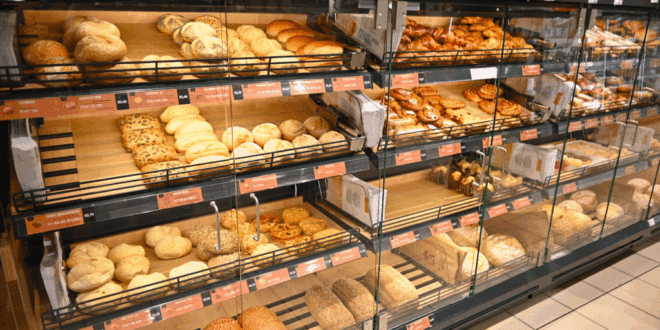
But not all loaves of bread are created equal. Photo credit: SJBright/Shutterstock
Since centuries, bread has been an important part of the Spanish diet. It is valued for its convenience, taste and perceived nutritional value. Many consumers think that fresh baked loaves sold in supermarkets have the same nutritional value as traditional artisan breads. Research has shown that a lot of the bread in supermarkets’ bakery sections does not meet consumers’ expectations.
Industrially produced loaves and pre-baked breads often contain additives. They also undergo rapid fermentation which can reduce the digestibility and nutritional content. Mass-produced breads have a longer shelf life and are more convenient than traditional artisanal breads that rely on wholegrain flours and slow fermentation.
Supermarket breads tend to be lighter, thinner, and lower-fiber, which indicates more refinement and less nutrition. These characteristics, along with chemical additives and shortcuts during production, can lead to digestive problems and lower overall nutrition intake when consumed regularly.
Dietary and Digestive Implications
Fibres, Gluten and Digestibility
Fibres are a major indicator of the quality of bread. Wholegrain breads promote heart and digestive health, provide sustained energy and help with digestion. Supermarket loaves often have less fibre, which makes them less satisfying and less healthy for digestion. Even breads labeled “wholegrain”, “integral”, or “integral-wholegrain” might not contain 100% wholegrain, misleading consumers about the true nutritional value.
A study When comparing the fructan and gluten contents of breads made in industrial and artisan bakeries, there were significant differences. Industrial breads have higher gluten and more fructan than artisanal breads. These differences are relevant for Non-coeliac wheat sensitivities (NCWS), and possibly coeliac related issues, because fructans and gluten are involved.
Industrial breads also use rapid fermentation Additives can decrease digestibility. For some people, pre-baked or mass produced loaves can be difficult to process. This may cause mild gastrointestinal discomfort. In contrast, artisan breads are made using natural fermentation. This allows enzymes to work more efficiently and bacteria time to break down the gluten and other substances, improving digestion and absorption of nutrients.
Economic and cultural Impact
Preservation of Traditional Baking
Small, traditional bakeries are under significant pressure due to the rise of mass-produced products. Many small artisan bakeries are unable to compete with supermarkets’ cheaper products, which leads to their closure and the loss of baking skills. It affects the availability and quality of breads, and also reduces transparency about ingredients and production methods. This leaves consumers with fewer options for genuinely nutritious products.
Bread diversity has also been affected by industrial breads. Pre-baked supermarket breads are dominating the market, and traditional varieties and regional recipes have become rarer. The breads are often lacking in the texture, taste, and nutritional benefits that come with slow fermentation, careful ingredient selection, and slower fermentation. When convenience overtakes traditional methods, consumers lose out on both the cultural richness of the product and its potential health benefits.
Investigation Findings
Documentary Research Evidence
A recent investigation In Spain, a study on the quality of supermarket breads revealed some worrying trends. In the documentary, experts interviewed confirmed that mass-produced or pre-baked loaves contain high levels additives and refined grains. They have a lower fibre content and nutrition than artisan breads. Medical professionals have also warned that eating such breads frequently could cause digestive issues and blood glucose fluctuations.
The documentary stressed that although supermarket breads are visually appealing, their nutritional value is often compromised for convenience and shelf-life. It also stressed the importance to support small bakeries who use traditional methods and slow fermentation, which naturally contain more nutrients.
In addition, research shows Industrial breads can have higher levels than artisan breads of mycotoxins, but still be below legal limits. Regulation and food-safety evaluations The high intake of refined products such as supermarket breads is linked to increased cardio-metabolic risk, but not directly with coeliac. Reforms in Spain shows that until 2019 Many breads labeled “wholemeal”, are made primarily from refined flour, with bran and colouring added.
Important Points for Consumers
Advice for Practical Advice
- Please read labels carefully. Check the type of flour, fibre content and additives. Terms such as “wholegrain”, artisanal, or “integral,” do not necessarily guarantee a higher nutritional quality.
- Pick Artisan bread when possible: The breads made in-house with slow fermentation methods have a higher fibre content and are more nutritious.
- Beware of supermarket pre-baked loaves Even fresh baked breads in supermarkets may contain additives and have a lower nutritional value. Regular consumption can affect your overall health.
- Support Traditional Bakeries Panaderias’ authentic artisanal bread helps to preserve local baking techniques and encourages the use of higher-quality products. It also maintains a variety of breads in the market.
Final Thoughts
While bread is an important part of Spanish cuisine, not all loaves were created equal. The convenience of supermarket breads is often at the expense of fibre, nutrient and digestibility.
Consumers can support traditional baking by choosing artisanal breads, carefully reading labels and understanding production methods. Expert commentary and investigations have raised awareness of the importance to scrutinise supermarket breads, rather than assume they are nutritionally sufficient.