Costa News Spain Breaking News | English News in Spain.

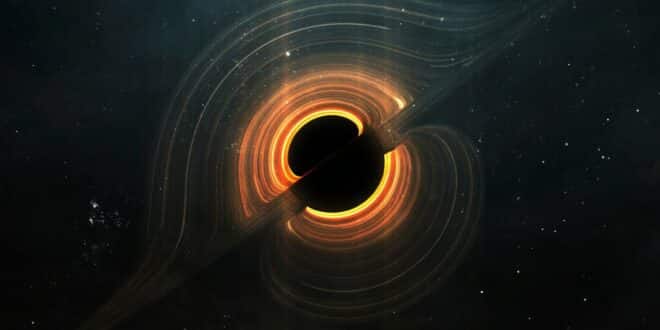
This model, say physicists, could explain a number of cosmic mysteries. Photo credit: Vadim Sadovski/Shutterstock
Could our solar systems, as well as everything we know, exist inside a dark hole? A growing body of speculative work is giving this idea surprising scientific attention. Recent papers published in journals like Universe You can also find out more about the following: SymmetryThe following is a commentary on the. Scientific American You can also find out more about the following: Real Clear ScienceThe long-debated theory of “black hole” cosmology has been revisited by. It is proposed that the Big Bang may not have been the beginning of the universe, but the event-horizon of a massive Black Hole in a “parent’ universe.
Scientists claim that this model can help to explain many cosmic mysteries. These include what triggered the expansion of the universe and why it appears as though space is stretching faster with time.
A Universe Borne From Collapse
Turning the Big Bang on its side
According to classical cosmology the universe started as a singularity – an infinitely dense, point which exploded into space 13.8 billions of years ago. But the black-hole-universe Model flips the idea on its side.
According to researchers such as Enrique Gaztañaga According to the Institute of Space Sciences, Barcelona, it is possible that our universe was created when a massive star or cluster of material collapsed in another cosmos under its own gravitation, forming a “bounced core” rather than collapsing. We may be observing the expansion of the black hole’s interior, which is the result of the rebound.
Dr Gaztañaga wrote that the mass and size of our known cosmos fit the physical parameters expected within the event horizon of a supermassive black hole. From the outside, it’s possible that our entire universe could appear to be nothing more than a supermassive black hole.
Galaxy Spins & Space Curvature – Hints
The evidence that fuels debate
Though the concept remains purely theoretical, some recent studies have revealed unusual clues which keep the conversation alive.
The data about the rotation of distant galaxies is one of the most impressive. Astronomer Lior Shamir from Kansas State University analysed thousands of galaxy images The spin direction of galaxies was found to be biased in a small but significant way. More galaxies seem to be spinning in one direction, rather than rotating clockwise or counter-clockwise. The data suggest that the universe rotates in a general direction. This would match the predictions of the black-hole model. In this model, spacetime is twisted around a central axis.
Other physicists have noted that a small positive curvature of the fabric in space, which European missions such as Euclid are measuring at present, could support a closed universe consistent with this hypothesis.
Important Points
- Some cosmologists think the universe might exist inside a black hole supermassive.
- The evidence includes a possible large-scale rotating and slight curvature.
- This theory is an alternative to the Big Bang model.
- The idea is viewed as “interesting” but not proven by most scientists.
- Future data from missions, such as Euclid, may confirm or refute it.
Scientists urge caution
Skepticism still high in scientific community
Although it is intriguing, the majority of experts agree that “black hole universe theory” remains far from proved.
Astrophysicist Paul Sutter has written in Scientific American While the mathematics are solid, the evidence for the idea is at best circumstantial. “We must always be careful,” he warned. “Assuming the existence of the entire universe requires extraordinary proof.”
Some astronomers caution that the observed imbalances in galaxy spin could be due to data bias, or an observational error. They admit that such unconventional ideas are useful for testing the limits modern cosmology.
What It Could Mean For Humanity
Space and time: a new perspective
If future research confirms that the universe is contained within a blackhole, this would fundamentally change our understanding of time, space and reality. Gravity, dark energies, and the speed of light may behave differently than what we think.
The idea is still firmly in speculation mode, but it’s a good reminder that there’s plenty of room for wonder in cosmology. Readers in Europe who follow missions such as Euclid, and the forthcoming Vera Rubin Observatory will find the research fascinating. They can see the many questions scientists still have about our place in the universe.
Evidence is not enough to support a compelling theory
The claim has captured the imagination of people around the world, but it does not replace the Big Bang theory. Black-hole-universe theories continue to be popular because they fill in long-standing holes in the cosmic story. If true, this would mean our solar system and galaxy and all of observable space are contained within one strange object.
The idea is one of the most fascinating “what ifs?” in modern science.