Costa News Spain Breaking News | English News in Spain.

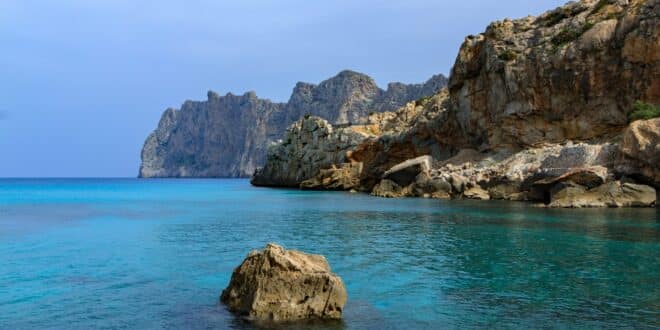
This year’s Mediterranean Sea heatwave is the hottest ever recorded, causing scientists to be concerned about its potential impact on marine life.
Scientists are warning about the consequences of recent marine heatwaves. They refer to ocean temperatures rising above average and lasting for an extended time.
Marine heatwaves refer to extended periods of high ocean temperatures in a specific season. This has led scientists to warn of the growing frequency of these natural phenomena and their potential long-term impacts.
In late June or early July, temperatures at the sea’s surface off the coast of Majorca were often higher than 30C. This is seven degrees warmer than the usual temperature for that month.
The warmer temperatures can be a welcome sight for tourists. However, the higher temperatures can create hidden dangers.
Although temperatures of over 30C at sea are not uncommon in late summer, they were extremely rare as early as the month of June.
Dr Oscar Esparza Alaminos, Coordinator of Marine Protected Areas at WWF España, said: “We have a lot of evidence that show the driving temperatures and causing ecological changes here year by year.”
“The rules of biodiversity are the first and most significant impact. We have many local species which are vital to the Mediterranean ecosystem.
The Mediterranean is a known as one of the world’s most vulnerable ‘climate change hotspot’ by scientists, warming faster than the global average, as because it is surrounded by land rather than open ocean.
Climate change is causing marine heatwaves to become more intense and more frequent. Experts warn that if nothing is done, the waters of this region could be altered beyond recognition.
A recent study found that the Alboran Sea is the westernmost part the Mediterranean, near the Costa del Sol. Rising temperatures make the water more hospitable for tropical marine species.
Species such as the grouper, which is native to Canary Islands waters, lionfish and even whale-sharks, usually found in tropical water, have been spotted off the coast of Southern Spain and Northern Morocco.
The warm temperatures are also bringing more harmful jellyfish and large swarms tropical Asian seaweeds, which are causing chaos on the Costa del Sol.
Dr Alaminos explained: “Rising temperatures and acidification in the water, species changes, and the invasion by bacteria all have an impact on the eco-system services, like fishing.”
“The loss or keystone species can unbalance the ecosystem. We are also exposed to tropical species invasion.”
The Mediterranean Sea has slowly warmed over the past 40 years. It went from having just one marine-related heatwave per annum covering a single area to four on average, and affecting the majority of the sea.
Climate change has reduced the cooling winds that slow down marine heatwaves and made them more frequent and intense.
Ocean heatwaves this summer caused severe damage to marine eco-systems across the globe. Western Australia saw its worst coral whitening on record while Northern Norway’s fishing industry was affected by salmon lice.
Dr Alaminos warned, “We must implement safety measures to marine protected zones, as climate change is a global issue.”
Click here for more Spain News by The Olive Press.