Costa News Spain Breaking News | English News in Spain.

WHAT comes to mind when you think of Spain? The image of millions of people sweltering under the Spanish sun, on a Costa beach, is what many think of. When their attention is diverted elsewhere, they tend to visit day-trip hotspots such as Gaudi’s surreal Sagrada Familia or the majestic Alhambra.
You’ll discover a treasure of breathtaking sights that are usually missed by tourists.
Olive Press has 12 dazzling cultural attractions that you should add to your summer travel plans. From ancient Roman theaters and dramatic gorges, to medieval walls and mysterious medieval walls.
You’ll skip the crowds, dodge the cliches – and come home with better travel stories than anyone else.
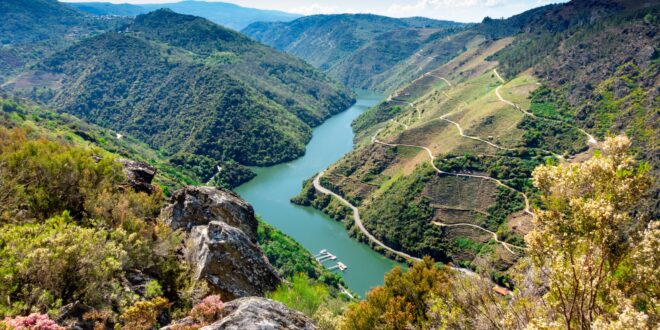
Sil Canyon, Galicia

A river cruise with cliffs that tower, monasteries hidden in the shadows and an experience you will never forget
Sil Canyon, in Galicia’s lesser-known Ribeira Scra region, could be considered a more eco-friendly version of the Grand Canyon.
The Sil River has carved a stunning gorge through granite cliffs that soar over 500 metres high — perfect for nature lovers, hikers, and anyone in search of a ‘wow’ moment.
Glide along the river by boat or tackle the trails on foot — either way, the views are next-level. You’ll find Romanesque monasteries and vineyards, as well as a bizarre microclimate which allows Mediterranean plants to thrive in this Atlantic corner.
Plaza del Torico, Teruel
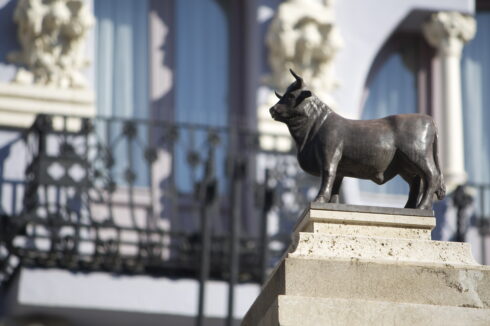
The coolest square in Spain has a tiny bronze bull and fibre-optic stars
Teruel is not on everyone’s tourist radar but its central plaza is anything but ordinary. At the heart of this elegant space stands a teeny bronze bull — the much-loved ‘Torico’. What is it surrounded by? The surrounding area?
The square was reimagined in 2007 by star architects b720 — and it’s the perfect base to explore Teruel’s Mudejar architecture, a UNESCO-listed stunner.
Casa de los Dragones, Ceuta
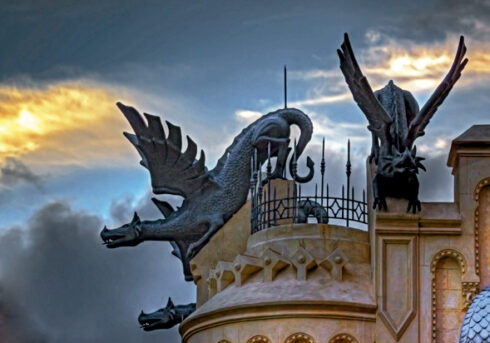
A real-life Game of Thrones moment – with dragons!
Ceuta is a Spanish enclave located just across the Med, from mainland Spain. It’s home to one of the most stunning buildings you have probably never seen.
The Casa de los Dragones – literally, House of the Dragons – is crowned with four fierce-winged beasts peering out over the city.
Originally built in 1905 and restored in 2006, this fairytale landmark is the crown jewel of the Plaza de los Reyes — and the perfect starting point for exploring Ceuta’s unique Spanish-Moroccan blend.
Horreos de Combarro, Pontevedra
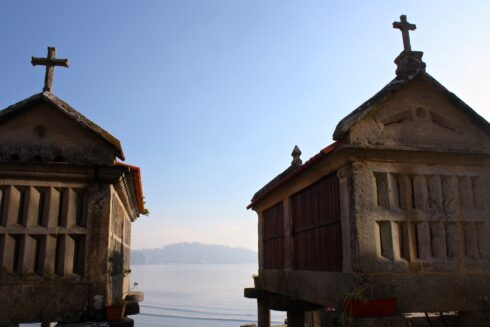
In one of Galicia’s most charming villages, you can find stone granaries near the sea.
Combarro is one such postcard-perfect village that looks like it was made for Instagram. It’s packed with history. Lining the waterfront are horreos – traditional Galician granaries on stilts – which have been used for centuries to keep grain dry and rodent-free.
Enjoy fresh seafood and the Ria de Pontevedra while strolling along cobbled streets.
Roman Theatre of Cartagena in Murcia

An ancient stage buried for centuries – now back in the spotlight
Cartagena, at first glance, might seem like another modern Spanish town. But hidden behind the buildings lies a jaw-dropping secret – a vast Roman theatre that once seated 6,000 spectators.
It was not until the end of the 20th Century that the theatre, built during the reign of Caesar Augustus, could be found. Explore the Roman baths, forums, and excavated ruins to walk through history. And yes – the theatre still hosts summer performances!
Puente Nuevo, Ronda, Andalucia

You’ve seen the bridge – now explore what’s underneath
OK, so Ronda’s Puente Nuevo isn’t exactly a secret – but most tourists stop at the top and miss the magic below.
You’ll see this 18th century bridge from a new perspective if you take the path through El Tajo Gorge. It towers 120 metres high. On the way you will pass by ancient Moorish baths, ancient mills, and soaring cliffs with eagles flying overhead.
Enjoy nature, history, and drama on one unforgettable hike.
Dali Theatre Museum, Figueres (Girona)
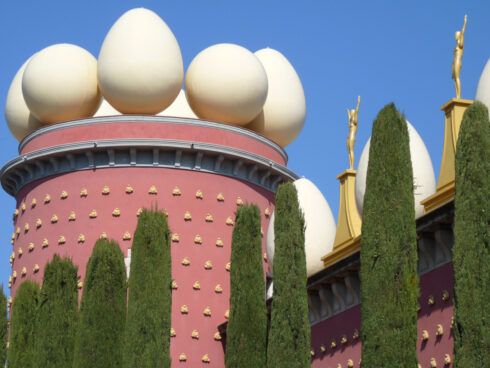
Surreal, strange and utterly spectacular – just like the artist himself
If Salvador Dali designed a museum, you’d expect something bizarre – and the one he created in his hometown of Figueres does not disappoint.
The rooms are filled with paintings and sculptures. There are also holograms, and other mind-bending installations. Dali’s grave is located here, under the stage in the old theatre.
It’s not just a museum – it’s a full-blown sensory trip through the brain of a genius.
Avila’s Walls, Castilla y Leon
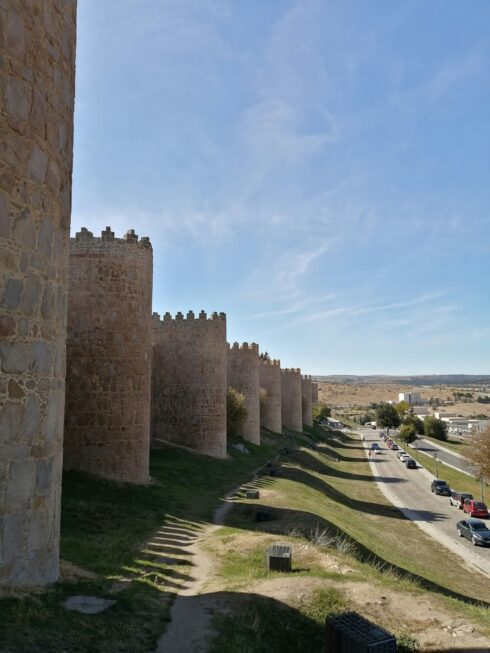
Europe’s best-preserved medieval walls – lit up like a fairytale
Avila’s 11th-century walls, measuring 2.5 kilometers and featuring 88 watchtowers are like something from a fantasy.
Enjoy the views of the Sierra de Gredos mountain range and the old town with its terracotta tiles.
Nighttime, the golden floodlit walls create one of Spain’s most magical views. Within the walls, you’ll find convents and cobbled streets as well as the birthplace for the mystic Saint Teresa.
Cuenca, Castilla La Mancha: Hanging Houses

Cliffhangers – literally!
Casas Colgadas, or Hanging Houses in Cuenca, cling on to the edge of an abyss. The sight is as beautiful as it’s nerve-wracking.
The medieval houses seem to be defying gravity as they teeter over the sheer drop into the Huecar River Gorge. One now houses the Museum of Spanish Abstract Art – perfect for art lovers with a head for heights.
The old city is a UNESCO World Heritage Site. There are many winding alleyways, hidden courtyards.
Las Medulas, Leon
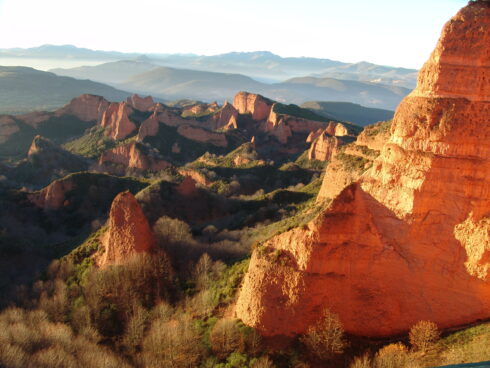
A Martian landscape… shaped by Roman greed
Imagine rust-red peaks and jagged hills – this is Las Medulas, a bizarre and beautiful landscape carved out by the Romans in their hunt for gold.
They used a technique called ruina Montium to blast whole mountains apart using water pressure. The result? A terrain that is out of this world has been designated a UNESCO World Heritage Site.
Take a hike through the tunnels to explore the caves. Then, head up to the Orellan Viewpoint for an incredible view.
Alquezar, Aragon
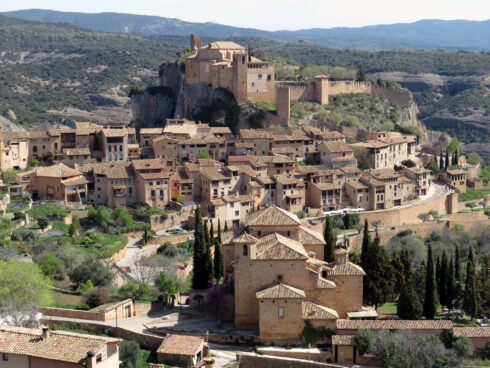
A fairytale village perched high above a canyon of a river
Alquezar will amaze you if Cuenca’s cliff-side houses did. Alquezar is perched high above the Vero River. It’s a medieval village with cobbled lanes and stone houses. There was also a fortified Moorish church.
It’s also a hub for adventure – the surrounding Sierra de Guara is a dream for walkers and canyoners. A glass of Somontano local wine at sunset will make your day perfect.
Setenil de las Bodegas, Cadiz

Where the ceiling is literally an cliff
Setenil is one of Andalucia’s most surreal villages — where the houses aren’t so much built on rock foundations but inside them.
Calle Cuevas del Sol, built into the natural overhangs a steep canyon, is shaded by real slabs of stone. The natural air conditioning is brilliant in the sweltering heat.
Setenil, once part of Nazari Kingdom is now a place of tapas bars hidden in caves, sleeping cats on stone steps and that unique mix of rustic charm and geological quirk.
READ MORE
Travel News at The Olive Press. Click Here to Read More.

Discover Tailor-Made Tours
Simply Holiday Bookings allows you to create your own personalized holiday experience.