Costa News Spain Breaking News | English News in Spain.

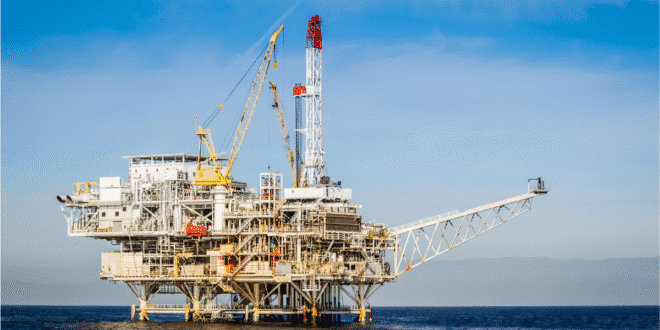
Regional tensions are caused by the gas drilling rights in Crete. Credit: hlehnerer via Canva.com
It began in the south of Crete, that’s where Greece has now redrawn a line. Athens has invited foreign companies to explore its exclusive economic zone for gas on June 17th 2025. Libyan Unity’s government rebuked Greece, saying that the water was theirs. Turkey is still in the shadows and behind both. Its 2019 Maritime Operation blurred the borders of this region for the first time. Greece’s strategies include drawing maps and testing certain boundaries in a regional context where international law is rarely aligned with realpolitik.
It’s not just a Greek-Libyan standoff. This is a triangular power struggle that will determine the future of energy in Europe. While Europe claims that it is committed to sustainability and going green, the battleground has evolved into a fight over drilling rights, pipelines and cables. How did we arrive at this point? Why do oil ambitions continue to fuel new conflicts? Why does this strange triangle involving Crete, Tripoli and Ankara reveal the true power struggle that is unfolding on the seas? Let’s take a look at it.
What Libya is and why it triggered Greece
The Olympia National Oil Corporation will open a bid on June 13, 2025 for a new offshore exploration block that overlaps with the maritime zones Greece has already claimed just south of Crete.
- Athens responded quickly, and on June 17, 2025 the Minister of Environment and Energy in Greece invited companies to explore this exact area.
- Libya is not in agreement and, in a letter to the government of Tripoli, accused Greece for violating its sovereign rights. The statement called the act provocative and ignored the proper negotiation channels.
- They asked that Greece stop this process and come back to the table for a discussion on maritime boundaries.
Greece insists on the fact that everything has been done in accordance to international law. Libya, too, is a party. It is unquestionably Greek that this is a reassertion in legal control of waters.
It’s more like a chessboard, with decades of alliances and energy diplomacy all converging.
Greece’s legal counterpoint
Athens is convinced that this area falls within the Exclusive Economic Zone and that it’s protected by International Law, which grants the countries the rights to explore and utilize maritime resources within a 200-nautical mile radius of their coast.
Interesting is the fact that Libya wasn’t a party to this agreement, so Tripoli has a completely different approach.
Greece views this as a legally and commercially drawn bid. Athens has planted a flag in the Mediterranean without sending ships or provoking a standoff. It’s not a military operation, but a rush of paper.
The fact that Greece announced its entire licensing schedule just four day after Libya is also not a coincidence. Athens’s defensive map strike is evident by the speed.
Greece has a long-standing position that energy exploration without coordination could destabilize the region. It is now time to face the elephant in room: Behind Greece’s Libyan flashpoint, there is a third party with a history and map of their own.
The Turkish angle
Turkey must be mentioned in any discussion of the maritime clash between Greece and Libya. In 2019, the Unity governments in Ankara, Libya, and Greece signed a maritime accord that marked a new border across the Mediterranean. This boundary cut through the waters Greece claims as its own and ignored islands such as Crete.
- Greece and the EU were outraged. But the deal was done, and gave Turkey an important foothold in Libya’s energy strategy, which hasn’t gone away.
- As the auctioning areas today are similar to those in the Turkey-Libya Deal, it has become relevant once again.
- Greece reacts to a move which appears to be a revival in Turkey’s previous strategy.
Just days before the flare-up in the Aegean, Turkey had submitted to UNESCO a new Maritime Map that challenged the zoning of the sea: Different sea, same story overlapping claim contested borders and the legal frameworks which do not match.
This is a triangular situation with a lot at stake: Crete lies to the North, Tripoli lies to the South and Ankara lies to the East. The real fight isn’t over oil or even gas; it’s about who will control the map. Greece is simultaneously defending multiple fronts.
One united Europe
Spain, Italy, Malta, and other countries have stakes in Mediterranean energy. While some depend on Libyan collaboration, others sign agreements with North African firms. Supporting Greece on this chessboard could be risky, as it could lead to future contracts and rekindle dormant maritime conflicts.
Greece is aware of this and acts more quickly in certain areas before hesitancy becomes an EU distance. In the Eastern Mediterranean, as solidarity is waning, it looks more like a wild west. Whoever moves first will draw the map.
This is a battle for recognition in an union that has become distracted, divided, slowly recalibrating their priorities away from the oceans, towards their own uncertain centre.