Costa News Spain Breaking News | English News in Spain.

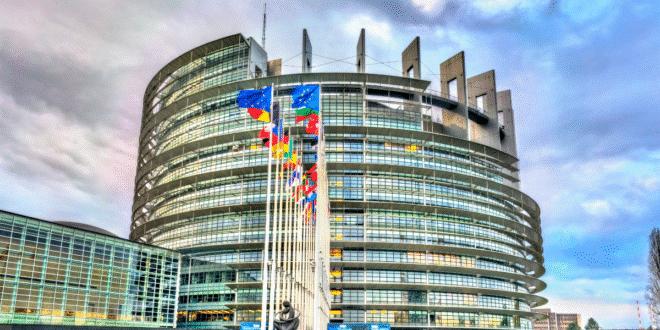
The EU Parliament in Strasbourg — where Big Tech faces its biggest challenges yet. Credit: Leonid Andonov via Canva.com
Google has always defended Android with the same argument: Android is free, flexible and good for competition. The EU never seemed to be convinced. The EU Court advisor’s rejection of the company’s final appeal appears to have permanently etched the largest antitrust penalty in Europe’s legal history. This case is about more than just pre-installed applications or default search engine; it’s about how a company operating under the guise openness, and shaped and influenced by billions users, can see its software installed by default.
The €4.125 billion fine may dominate the headlines. The real cost for Google isn’t the money but rather the precedent set by Brussels, which prevents platforms from growing and checking and then calls it innovation. This time it is not only Android that’s under scrutiny, but the idea of digital ecosystems being a neutral space.
Google’s origins
In 2018, the European Commission imposed a record fine on Google for its control of the Android operating system.
- As a condition to accessing the Play Store, phone makers were required to install Google Search on Chrome.
- One condition shaped the lives of hundreds of millions of people in the EU. It left little room for competitors and monopolised the market.
Google appealed in 2022 to the General Court, which agreed that Google had imposed a legal restriction on manufacturers.
- It looks as if the final legal card of the company and its appeal to the EU Court of Justice will not be heard in 2025.
- The Advocate-General Juliane Kokott deemed Google’s arguments as “unconvincing”, and their comparisons with hypothetical competitors “unrealistic”.
- This may sound technical, yet it gets to the core of the issue: If your market power is such that no other alternative can compete in fair conditions, you are not offering choice. You’re offering a default — locked in and dressed up as freedom.
What does this ruling mean?
The €4.125 billion fine is the headline, but the real punishment is what the ruling will say about the platform’s default. Google says that you can download another browser and change your search engine at any time if you want.
If one company controls those who first see the advertisement, is that enough to influence the behavior and the behaviour of the masses? It’s market power.
The case illustrates that offering an option is not the same as offering competition, particularly when users rarely change their settings.
Kokott’s recommendation — and history suggests it probably will — establishes a legal precedent: Even though there are technically alternatives, defaults can be anticompetitive..
This idea may have a ripple effect on future battles over operating systems and voice assistants.
Why Europe continues to go after Google
Europe has been fighting Google for the last decade. The EU has fined the company for shopping ads for Android dominance in AdSense, totalling more than €8 billion, and that’s before we factor in the upcoming Digital Markets Act enforcement, which could reshape Google’s operations entirely.
Brussels has a different approach to these cases. Not just the consumer is at risk. It’s about structural distortion — when a company becomes the road, the gate, and the destination all at once.
Google is a foundation which regulates these foundations and has the ability to control what gets built over them, such as search ads, maps, shopping, or YouTube.
They decided to stop treating platforms as services and instead treat them as infrastructure. This is why the fine is important, and why it sticks. Europe is not just punishing abuse. It’s rewriting a blueprint.
Digital Markets Act
Google will soon receive its ruling on the Digital Markets Act. The act was first introduced in march 2022. It will influence how Tech Giants are run. Companies like Google Apple Meta and Amazon, who have been titled as Gatekeepers by the Digital Markets Act, were first introduced in March 2022.
Google’s solution is to offer real browser choices on bundle services, let users uninstall defaults and redesign interfaces which don’t fit the people’s needs.
The €4.125B fine isn’t just a punishment for what Google did in 2018. The fine will be used to determine what regulators do in 2025. It sets the mood. It sets the tone. Most importantly, the message is sent to each gatekeeper: The age of self-policing has ended.
What is the real meaning of power?
Google creates tools while Europe erects barriers. Between these two narratives, most people are living, using applications and systems that they did not choose.
Google’s defence in 2018 was to give users everything. In 2025, Europe will say that Google gave users too much, and yet too little, with too little competition and too many steps before they could switch.
It’s a bigger issue, because it breaks the logic behind the dominance of the dominant language.