Costa News Spain Breaking News | English News in Spain.

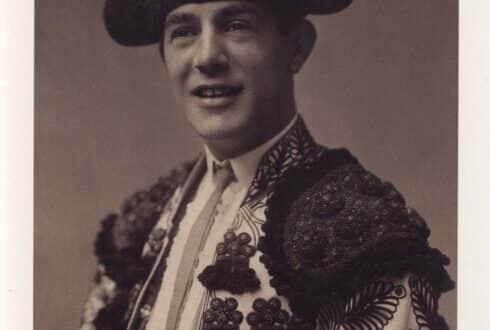
ON June 6, 1891 in the city of Sevilla, Ignacio Sánchez Mejías was born.
He was dead 43 years later.
It is a tragic story, full of irony and ironic details. This inspired one of Spain’s greatest poems.
Ignacio was the son of a renowned doctor. He expected him to go into medicine. The boy, although very intelligent and a good student, had no interest in going to college. He wanted a career as a bullfighter.
Around 1910, he fled his home and boarded a ship bound for Mexico. He became a torero there.

During World War I, he returned back to Sevilla and married the sister of Joselito, the famous matador. Ignacio’s unusual personality made this an oddity.
Joselito was a gypsy, and even today it is not normal for gypsies to ‘marry out’, but Ignacio was totally accepted by the gypsy community. He “ticked all the boxes”, as we say in modern times.
Ignacio Sánchez Mejías loved flamenco music. Back in the early 1900s, the most important bullfighters of that time were all gypsies. He fit in seamlessly.
The years 1919-22 were his most successful as a matador. He retired at age 31 because he wanted a career as a writer. Over the next 12 years, he would make a number of comebacks.
He was present in Talavera De La Reina bullring, May 1920. There he witnessed the goring death of Joselito. In the infirmary of the bullring, there is a photograph that shows Ignacio holding the head his brother-in law.
Ignacio achieved remarkable things in the 1920s. He wrote a column about bullfighting that was highly regarded, starred as a leading actor in a film and even wrote a play for a Madrid stage.
The play, which was set in a mental asylum, explored the theories of Sigmund.
He also befriended the andaluz playwright and poet, Federico García Lorca. Both men would die young. Their fates would be inextricably connected.
Federico and Ignacio gave lectures in New York together, at the beginning of 1930. Ignacio appeared to have a promising future as a writer, and teacher.
But he could not leave the bulls behind.
He fought throughout northern Spain in summer 1934 and told his friends he’d hang up his lights suit for good once the Pontevedra cridida was over.
Things started to go wrong.
His friend Domingo Ortega was fighting the bulls in La Coruña on 6 August when a matador’s sword went flying into the crowd and killed a spectator.
The same day, Domingo Ortega’s younger brother died unexpectedly. Ignacio was asked to finish the contract fights by the matador before he left for Madrid.
The next corrida would be held in Manzanares – a small village a hundred miles to the south of Madrid. Ignacio was compelled to go but had two problems.
Manzanares was making it difficult for him to attend his retirement ceremony in Pontevedra. Perhaps he would be able to make it if he fought out of order as the first Matador.
He also felt that the Manzanares Bullring’s infirmary was not adequate. He insisted that if a bull was gored, he would like to be transported by ambulance to Madrid.
Ignacio dropped out of the car that was taking him to Manzanares after it broke down. However, a friend reminded him that he could be accused as a coward, so he decided to continue by public transport.
In Manzanares, the management team wouldn’t let him fight out of order. He had to fight “Granadino”, a bull that all matadors were trying their best to avoid.
Ignacio, who was not scheduled to attend the corrida, was fatally injured by a bull that he had never wanted to fight. He didn’t arrive at the hospital until 7 am the next morning, after a long ambulance ride to Madrid.
He was already dead.
The poet Lorca (who himself had less than two years to live) wrote “The Lament for Ignacio Sánchez Mejías”, one of the most beautiful tributes ever dedicated to a lost friend.
“It won’t be for a long time if it ever happens.
Andalucians are not born every day
Who was so noble?
I sing in words that moan his elegance.
Remember a sad wind in the olives.”