Costa News Spain Breaking News | English News in Spain.

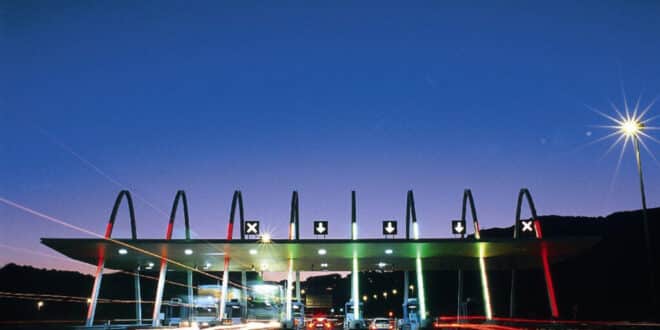
The high season is defined as June, July, and August. Credit: Autopista del Sol
If you live along the Costa del Sol and regularly travel between Málaga and Guadiaro, chances are you’ve felt the pinch of one of Spain’s most expensive motorways. The AP-7, a key route linking Málaga, Marbella, Estepona and Sotogrande, costs €18.85 for a full journey since April 11—with further price hikes expected this June.
For light vehicles, the full journey between Guadiaro and Málaga now costs €11.60 during the low season and rises to €18.85 in the high season. The high season covers the months June, August, and September as well the 17-day period from the Friday preceding Holy Week until the Sunday following Easter.
Discounts are available to frequent motorway users who travel every day during the week. These discounts range from 20% to 30%. In addition, drivers who install a Vía-T device in their vehicle can benefit from extra discounts and added convenience when passing through toll booths.
The toll road, operated by the company AUSOL since its opening in 1999, has generated more than €1.3 billion in revenue, with a staggering €985 million in operating profit and €355 million in net profit, according to a recent report presented by the provincial leader of the Partido Popular (PP), Patricia Navarro. What’s more, the Spanish state has earned more from the road than the concessionaire itself, pocketing €384 million in taxes—mostly through VAT and corporate tax.
Shocking imbalance
Navarro has slammed what she calls a “shocking imbalance” in government priorities, highlighting that only €1 million in toll subsidies were offered last year, despite €30 million in tax revenues from the AP-7 in 2023 alone. For those living or working along the Costa del Sol—locals and foreign residents alike—the lack of toll relief is causing growing frustration.
“This road is a major burden for one of Spain’s fastest-growing provinces,” Navarro said, calling the motorway “a brake on Málaga’s development” and “a waste of time and money for residents and workers”. One of Europe’s highest toll roads per kilometre is burdening expats that commute daily or regularly travel between towns.
It gets worse: there’s no rail alternative. Despite many years of promises the “Tren Litoral”, coastal railway, which has been long discussed, is still a far-off dream. “The only result so far has been yet another study,” Navarro quipped, adding that the lack of infrastructure planning ignores Málaga’s booming population and tourism.
The reality of high tolls is harder for expats to overlook. Many of them moved to Spain to enjoy a relaxed life and a lower cost of living. Towns like Marbella, Mijas and Estepona remain disconnected by train from Málaga, leaving private cars and the costly AP-7 as the only reliable travel option.
The report highlights the stark regional disparities.
While the AP-9 in Galicia received €84 million in subsidies last year—enough to fully cover the AP-7 tolls for a whole year—the Málaga motorway continues to be excluded. Other roads, such as the AP-66 and AP-53 Galicia in Asturias, have also benefited from public funds. Toll-free sections have been added to the AP-7 in Alicante.
Navarro says the PP does not oppose companies that make profits on investments, but calls for immediate action by the Spanish government. Direct subsidies, refinancing concessions to reduce user costs, or a public purchase of toll roads are all possible solutions. She explained that “this isn’t a political issue.” “It’s about fairness and giving Málaga the same opportunities as other parts of Spain.”
The issue is still becoming political. Navarro used her remarks to challenge the central government and the recently appointed leader of the Málaga branch of the Socialist party, urging them to “fight for what the province deserves”. She also accused transport minister Óscar Puente of offering only vague promises about the long-delayed rail project, and tax minister María Jesús Montero of failing to provide real answers on infrastructure funding.
For British residents along the Costa del Sol—many of whom contribute significantly to the local economy through property, business and tourism—the AP-7 toll is more than a nuisance. This reflects wider concerns about public investments and equality between the regions. It’s a topic that will remain hot as the summer season approaches. With its inevitable traffic and increasing costs, this issue is sure to continue to be of interest for locals as well.