Costa News Spain Breaking News | English News in Spain.

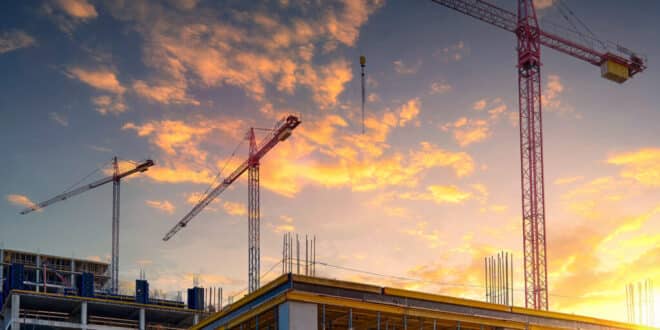
By default, all new housing built in these areas will be protected by some type of regulation. Credit: SergeyKlopotov/Shutterstock.com
The Balearic Islands will permit the construction of housing on transitional areas (classified as rural land) without the need to have first exhausted all urbanisable land—As long as the councils of the towns justify it.
In this agreement, transitional land will be eligible to be reclassified into urbanisable plots in order for more housing to built in municipalities with over 20,000 people. Property developers previously asked the regional government not to allow the use of rural plots until all urban and urbanisable land in each municipality has been used. Balearic officials have stated that construction will continue to be prioritized on urban land and urbanisable plots.
The decree allows housing to be constructed in transitional zones without exhausting the urbanisable land first, provided the councils concerned provide justification.
The market price for 25% is the current rate
Developers also asked that in these transitional zones, only housing with a price cap or social benefits be permitted. By default, 100 % of all new housing in this area would be protected through some form of regulation.
Vox’s amendments will still allow up to 25% new housing to sell at market price, as long as it is supported by an economic feasibility document. Access to social housing and price-capped homes will be limited for those who have resided in the Balearics Islands for a minimum of five years.
It will be up to the local councils—by vote in full session—to decide whether or not to reclassify these rural lands. In Mallorca, the municipalities that could adopt this measure include Palma, Calvià, Marratxí, Llucmajor, Alcúdia, Inca and Manacor.
Urbanisable land extension
The new regulations on urbanisable land will allow for building in all municipalities that have more than 10,000 residents. The Strategic Residential Projects, which were originally reserved for Palma will now extend across the entire Balearic Archipelago. Construction will be subject to the approval of the island council.
In Mallorca, 17 municipalities meet the criteria to build on this type of urbanisable land: Palma, Alcúdia, Andratx, Calvià, Campos, Capdepera, Felanitx, Inca, Llucmajor, Manacor, Marratxí, Sa Pobla, Pollença, Santa Margalida, Santanyí, Sóller and Son Servera.
Opposition says it is a speculative agreement
Iago Négueruela is the parliament spokesperson of the PSIB/PSOE opposition. He has criticised the decree for being a “speculative deal” It is claimed that it is directed at Different groups of developers want to expand in various directions. We’ll soon know their names and surnames. He said. This isn’t a project about social housing. It’s all about establishing future rights to land. They’ll then accuse the Left of declassifying property. He said.
Housing crisis: Social organisations criticise the lack of ambition
Social organisations have criticised the Balearic government for failing to propose bold measures to regulate, among other things, rental prices—particularly in a context where a large proportion of the population spends over 40% of their income on housing. This is despite the fact that more than 105,000 homes in the Balearic Islands remain vacant—23.9% more than a decade ago, according to 2021 data.
They also complain that the decree does not address the issue of holiday rentals for short periods or limit the purchases of second houses by wealthy foreigners. They call for a legal guarantee to residents of public housing stocks, citing the small size of the island and the urgent necessity to control housing prices.
The Balearic Islands is also the seventh Spanish autonomous community with the highest number of properties held by large landlords—defined as those who own more than ten properties. They control 26,061 properties, which is 4.53% (574,813 homes) of the total housing stock. Of these, 6,672 homes belong to landlords with portfolios of over 100 properties—1.16% of the total—according to the Cadastre and the Ministry of Finance.