Costa News Spain Breaking News | English News in Spain.

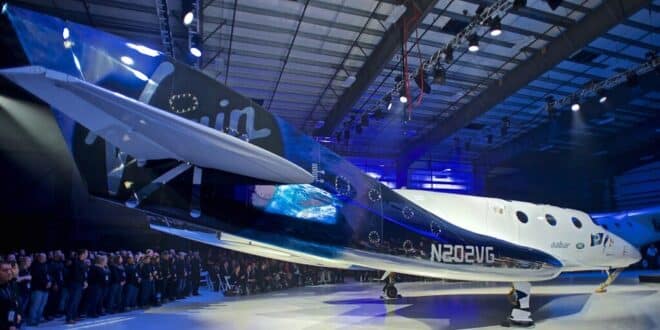
Since the 1960s, the idea of being able to cross the Atlantic in an hour and half has intrigued travellers. But what was once considered science fiction is now becoming a reality. Private spaceflight companies are seriously exploring the possibility of suborbital travel. Rockets could launch passengers into space and then land them thousands of kilometers away. If this technology is implemented, the trip between London to New York could be reduced from seven hours down to 90 minutes.
Even though the engineering may not be simple, the principle is. A suborbital aircraft would climb vertically to the edge space, rather than flying through the air like a conventional aircraft. Travelers would feel weightless for a couple of minutes as the craft soars above the Earth and then begins its descent. By skipping the Earth’s upper atmosphere, travel times and distances are dramatically reduced.
SpaceX has discussed publicly using its Starship rocket to “point-to point” travel on Earth. Animated demonstrations show passengers boarding at one major city, and arriving at another in less than two hours. Blue Origin, founded by Jeff Bezos and specializing in aerospace, has flown the New Shepard rocket with passengers multiple times, proving that suborbital flights are safe. Virgin Galactic led by Richard Branson has initially focused on space tourism but its technology can be adapted to ultra-fast, long-haul travel. Insiders in the industry believe that limited trials for passenger or cargo service could take place before 2035. The first prototypes may be tested as soon as the next few year. However, there are still many challenges before these flights become a part of daily life. The most important issue is safety. Vehicles need to be reliable and safe, and capable of withstanding extreme temperatures and G-forces. Launch and landing facilities will also have to be transformed into “spaceports”, which are equipped to launch rockets from areas near major cities.
The cost is another big obstacle. The early ticket prices will likely be astronomical and accessible only to wealthy elites, governments or corporate entities. Analysts compare potential ticket prices with the early days of aviation, when only wealthy individuals could afford transatlantic travel. In time, however, technological advancements and competition could lower prices. Regulations are another complication. Suborbital flights can cross national and multiple airspaces in minutes. They also raise new questions regarding sovereignty, security and cooperation. The aviation and government authorities will have to adapt quickly to this technology if it is to be implemented on a global level.
Despite obstacles, the potential rewards are transformative. Business, tourism and even emergency responses would be revolutionised if London could connect with New York within 90 minutes. Imagine a world in which international leaders can meet face to face within hours and medical teams can be dispatched across the continents at record speed. The idea of eating breakfast in London, then lunch in New York, and dinner at home the next day may not seem as outlandish as it seems. Suborbital flights are no longer just a dream. The countdown has begun to ultra-fast journeys across the Atlantic. With billions of dollars invested, prototypes that are already in flight, and an entire industry dedicated to pushing the limits of human travel.